



Rebecca Dekker
PhD, RN
The Evidence on: Fetal Monitoring
Originally published on July 17, 2012 and updated on May 21, 2018 by Rebecca Dekker, PhD, RN and Anna Bertone, MPH. © Evidence Based Birth®. All Rights Reserved. Please read our Disclaimer and Terms of Use. | For a printer-friendly PDF, become a Professional Member to access our complete library. | Leer en Espanol.
Fetal monitoring occurs when trained care providers use tools to monitor and interpret the baby’s heartbeat during labor and birth. The information that health care providers get from fetal heart patterns during labor helps them decide whether or not to intervene in the birth process. In this article, we cover the evidence for the different types of fetal monitoring and their pros and cons. We also explore the history of fetal monitoring, barriers to evidence-based care, and ways to improve the current situation.
What Are the Different Types of Fetal Monitoring?
Electronic Fetal Monitoring
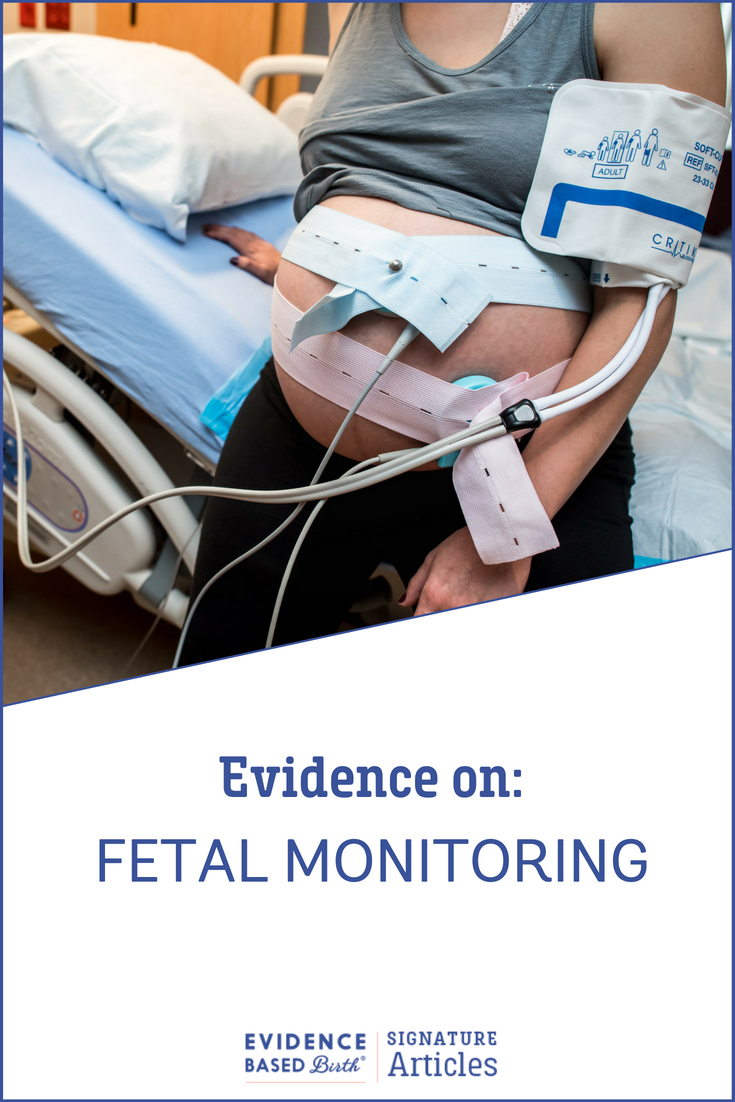
Electronic fetal monitoring (EFM), also called cardiotocography (CTG), is when the baby’s heart rate is monitored with an ultrasound machine while the mother’s contractions are monitored with a pressure sensor (Alfirevic et al. 2017). Both of these sensors are linked to a recording machine, which shows a print-out or computer screen of the baby’s heart rate and the mother’s contractions shown together, often called EFM tracings. The monitor is assessing the baseline fetal heart rate and how it changes with contractions. It records any increases in the fetal heart rate (accelerations) and any decreases (decelerations), as well as the frequency and duration of the mother’s uterine contractions (Smith et al. 2016).
According to the Listening to Mothers III national survey, 89% of mothers who experienced labor in a U.S. hospital in 2011-2012 used EFM at some point during labor (Declercq et al. 2014).
Continuous Electronic Fetal Monitoring
Many hospitals routinely use continuous electronic fetal monitoring during labor. Among mothers who used EFM in the Listening to Mothers III survey, most described using it either continuously (60%) or for most of the time during labor (20%).
The Association of Women’s Health, Obstetric and Neonatal Nurses (AWHONN) in the U.S. recommends “initial and ongoing” assessment of EFM tracings (AWHONN, 2015). Some people interpret this language to mean that hospital staff should actually watch EFM tracings continuously. If the person giving birth has risk factors, then assessment and charting of the EFM tracings may be done as frequently as every 5-15 minutes. Monitors are also usually set to alarms, so staff are notified when the heart rate is abnormal or the monitor is not picking up the heart rate.
Mobile Electronic Fetal Monitoring
Some hospitals have wireless, waterproof electronic fetal monitors. Unlike traditional fetal monitors, some wireless monitors (like the Novii) are water resistant (can be used in the shower) or while the birthing person is laboring in upright, active positions away from a hospital bed.
Intermittent Electronic Fetal Monitoring
Intermittent means using something at regular time intervals, and not using it continuously. The Listening to Mothers III survey reports that for 23% of U.S. mothers, EFM is used only intermittently during labor or only for a short time after hospital admission as a baseline measure (Declercq et al. 2014). Intermittent electronic fetal monitoring, although fairly common, hardly has any research evidence backing its use. Some hospitals have their own definitions of intermittent EFM; however, we could not find any professional guidelines that recommend how to use intermittent EFM during labor.
Hands-On-Listening (Intermittent Auscultation)
Another fetal monitoring option is intermittent auscultation, which we call hands-on listening. With hands-on listening, the care provider listens to the fetal heart rate for short periods of time at regular intervals. They document the fetal heart rate, rhythm (regular or irregular), any fetal heart rate accelerations, and the depth, timing, and duration of any decelerations (Smith et al. 2016). While listening, the care provider also feels the mother’s contractions by placing a hand on the abdomen, and documents the frequency, duration, and intensity of the contractions.
Hands-on listening alone is used with about 11% of mothers giving birth in U.S. hospitals (Declercq et al. 2014), and is the primary method of checking fetal well-being at planned home births and freestanding birth centers. Most guidelines state that hands-on listening should be done for at least 60 seconds at a time, at least every 15-30 minutes during the active phase of the first stage of labor and at least 5-15 minutes during the pushing phase of the second stage of labor (ACNM 2015). The Society of Obstetricians and Gynecologists of Canada proposes that hands-on listening be done at first assessment and about every one hour during early labor (Liston et al. 2007). See the list of resources at the end of this article for links to several professional guidelines for hands-on listening protocols.
There are several different devices that can be used for hands-on listening during labor (Lewis et al. 2015); (Cascade 2018). The most popular option in the U.S. is probably the handheld fetal Doppler ultrasound device. The fetal Doppler detects the fetal heart motion and converts it to sound, which can be heard out loud. Dopplers can be audio-only or come with a digital display of the baby’s heartbeat. The features of the fetal Doppler include:
- Comfortable for the mother
- Everyone in the room can hear the fetal heart beat
- Can be used in many different laboring positions
- Can be used underwater
- Allows for more personal space
- Does not require wearing uncomfortable belts
- May calculate and display fetal heart rate values
The drawbacks of the fetal Doppler are that it is costlier to purchase and maintain than some of the other options listed below, the probe is very sensitive to damage, and sometimes the Doppler may display the maternal heart rate instead of the baby’s, which can cause confusion.
Other options for hands-on listening include:
- The Pinard fetal stethoscope the most common tool for hands-on listening used around the world. It is a hollow, horn-shaped tube made of wood or metal that amplifies sound waves carried from the fetal heart to one of the listener’s ears.
- Pros: Inexpensive and available in most countries
- Cons: May be uncomfortable for the mother, difficult to use in some laboring positions, and allows for listening with only one ear at a time
- The DeLee fetal stethoscope has a bell-shaped end that amplifies sound waves from the fetal heart and carries them to both of the listener’s ears. The metal headband allows the listener to be hands-free.
- Pros: Inexpensive and allows for listening with both ears
- Cons: May be uncomfortable for the mother and difficult to use in some laboring positions
- The Cascade Allen Type fetal stethoscope is a type of fetoscope that is popular with midwives in the U.S. It is similar to the DeLee fetal stethoscope in design but without the metal headband.
- Pros: Inexpensive, allows for listening with both ears, and comes with the option of extra long tubing so that the mother can also listen to the fetal heart rate
- Cons: May be uncomfortable for the mother and difficult to use in some laboring positions
- The Leff fetal stethoscope is another fetoscope that is popular with midwives in the U.S. It has a weighted bell that enhances fetal heart tones and blocks external noise.
- Pros: Best sound quality of the different fetoscopes, allows for listening with both ears, can be used underwater, and possible to use in many different laboring positions
- Cons: More expensive than the other fetoscopes and may be uncomfortable for the mother
History of Fetal Monitoring
The first use of a device to listen to the adult heart rate was by French physician René Théophile Hyacinthe Laënnec in 1816 (Lewis et al. 2015), who invented the stethoscope. The story goes that he was too embarrassed to place an ear on a young woman’s chest to hear her heart beat. So instead, he rolled sheets of paper into a tube and listened through this device. The paper listening tool was later made in wood to become the first wooden stethoscope.
It is thought that the fetal heartbeat was first heard in the middle of the 17th or 18th century by placing an ear to the mother’s abdomen. However, in 1822, fetal heart rate monitoring during labor became generally accepted with Lejumeau de Kergaradec’s use of the stethoscope (Obladen 2018). The first fetal electrocardiogram (EKG) recording took place in 1906 (Heelan 2013). In 1958, Dr. Hon from Yale University first identified fetal distress by monitoring the fetal heart rate continuously through the mother’s abdomen (Hon 1958).
Continuous electronic fetal heart rate monitoring was introduced into hospitals in the 1970s without evidence from clinical trials, but with a strong marketing push from the monitoring industry (Obladen 2018). The machine was marketed as a scientific breakthrough that could predict fetal distress and bring an end to cerebral palsy—still the most common motor disability in childhood (CDC 2018). It was embraced by most obstetricians and nurses.
Women were not informed at the introduction of EFM in the 1970s that its use was totally experimental. Today, the use of continuous EFM machines is widespread, although, as you will see, it is still lacking evidence of benefits (Sartwelle et al. 2017). EFM was used among 45% of laboring women in 1980, 62% in 1988, 74% in 1992, and 85% in 2002 (ACOG 2009). Today, as we mentioned earlier, the rate of EFM during labor is around 90%. As the use of EFM during labor increased, so did the Cesarean rate, and it is possible that these two trends are connected. Between 1970 and 2016, the Cesarean rate in the U.S. increased from 5% to 32%. And “non-reassuring fetal heart tones” became the second most common reason for first-time Cesareans in the U.S. (ACOG 2017, #184).
What Is the Evidence on Fetal Monitoring?
Evidence on Continuous EFM vs. hands-on listening
In 2017, Cochrane researchers combined the results of 12 randomized, controlled trials including more than 37,000 participants (Alfirevic et al. 2017). Most of the studies were of poor quality and took place in the 1970s and 1980s. Both technology and clinical practice have changed over the years and we do not know what effect this would have on the results if these studies were re-done today. In all of these studies, people were randomly assigned to receive either continuous EFM or hands-on listening during labor.
The researchers found no differences between the continuous EFM group and the hands-on listening group in Apgar scores or cord blood gases, rates of low-oxygen brain damage, admission to the neonatal intensive care unit, or perinatal death. They also found no difference between groups in the percentage of people using medication for pain relief during labor. The overall findings were consistent for people with both low-risk and high-risk pregnancies. When the researchers removed the poorer quality trials from the analysis it did not change the overall findings.
Importantly, there was a 50% lower risk of newborn seizures in the continuous electronic fetal monitoring group; however, overall, seizure events were rare (about one in 500 births, or 0.2%). The risk of a newborn seizure was 0.15% for people with continuous EFM vs. 0.3% for people with hands-on listening during labor. Unfortunately, there have not been any long-term follow-up studies looking at the harms of newborn seizures, so we don’t know how important preventing a seizure is to the long-term health of a child (Alfirevic et al. 2017).
One concerning finding was that people in the continuous electronic fetal monitoring group were 63% more likely to have a Cesarean and 15% more likely to experience the use of vacuum or forceps when compared to those in the hands-on listening group. The overall Cesarean rate varied widely between the different studies—it ranged from a low of 2.3% to a high of 35%. However, two-thirds of the data on Cesarean rates in the meta-analysis came from the study with an extremely low Cesarean rate of 2.3%. In the meta-analysis, the absolute risk of Cesarean was 3.6% for people receiving hands-on listening and 5.9% for those receiving continuous EFM. Of course, the overall Cesarean rate is much higher in most settings today.
The Cochrane researchers estimated that if the Cesarean rate were increased to a more modern rate of 24% among people receiving continuous EFM, then the Cesarean rate would be 15% among those receiving hands-on listening. This means that there would be one additional Cesarean for every 11 women monitored by continuous EFM. In addition, as many as 667 women would have to be monitored with continuous EFM to prevent one newborn seizure. This amounts to an estimated 61 unnecessary Cesareans from continuous EFM in order to prevent one newborn seizure event. As you can see, the risk-benefit debate focuses on preventing Cesareans vs. preventing rare newborn seizures, and not everyone agrees on which is more important to prevent.
It’s possible that the effect of continuous EFM on Cesareans may be even greater in real-world hospital settings today. In an earlier version of the Cochrane review, the researchers grouped the studies into those with a Cesarean rate of less than 10% and those with a Cesarean rate of greater than 10% (Alfirevic et al. 2006). They found that in hospitals where there are higher Cesarean rates, continuous EFM leads to an even higher risk of Cesarean.
The Cochrane review did not find a difference in the rate of cerebral palsy between the continuous EFM group and the group who received hands-on listening. Other researchers have found that continuous electronic fetal monitoring is a very poor test for detecting potential cerebral palsy. False positive rates for predicting cerebral palsy are as high as 99.8%, even in the presence of “dangerous” signs such as multiple late decelerations (slowing of the heart rate after contractions) or decreased variability between heart beats (Nelson et al. 1996). In their 2009 practice bulletin, ACOG concludes that there is Level A evidence (based on good and consistent scientific evidence) that the false-positive rate of EFM for predicting cerebral palsy is greater than 99%. Put another way, most positive test results will be wrong. The false positive rate is so high that for every 1,000 fetuses with an abnormal heart rate pattern that indicates cerebral palsy is at risk of occurring, only one or two will go on to develop cerebral palsy (ACOG 2009).
In a commentary in the Journal of Obstetrics & Gynecology, Grimes and Peipert (2010) make the case that that EFM was adopted as a public health screening program without meeting important criteria for what make a good screening test. In order to be considered a “good” screening test, the test must be able to tell the difference between people with a real problem and those without. A poor screening test for a rare outcome could be considered unethical, since it can cause healthy people to think they are sick, lead to unnecessary medical tests and procedures with harmful side-effects, and waste money and other resources. This is some researchers’ concern with the regular use of continuous EFM to screen laboring people for fetal complications.
The rate of cerebral palsy has stayed the same over time, despite the widespread adoption of using EFM during labor. About one out of 500 children have been diagnosed with cerebral palsy since 1985 (Van Naarden Braun et al. 2016). ACOG suggests that the main reason that the rate of cerebral palsy hasn’t changed is because 70% of cerebral palsy cases occur before labor begins. A review published in 2013 looked at 23 studies to determine how often birth asphyxia, or a lack of oxygen during birth, is linked to cerebral palsy (Ellenberg and Nelson 2013). They found that only a minority of cerebral palsy cases are linked to birth asphyxia. In other words, most cerebral palsy cases are due to prenatal factors before labor begins, and cannot be prevented by EFM.
Some researchers think that another basic assumption of EFM may also be faulty (Lear et al. 2016). It’s possible, they say, that the majority of decelerations, or rapid falls in fetal heart rate, are normal and not dangerous. A healthy fetus may be able to adapt to brief but repeated periods of low oxygen during contractions by triggering something called the peripheral chemoreflex. This theory would help to explain why many babies are born healthy despite repeated brief decelerations during labor. If this theory is correct, it means that what qualifies as normal fetal heart rate patterns during labor is broader than previously thought.
Does continuous EFM prevent stillbirth or newborn death?
Rates of intrapartum death (stillbirth) were already falling when continuous electronic monitoring was introduced in the 1970s (Hornbuckle et al. 2000). This makes it difficult to interpret the evidence from observational studies. A review by Hornbuckle et al. (2000) found that 12 out of 13 observational studies showed a decrease in stillbirths during labor, after the introduction of continuous EFM. In addition, nine out of nine observational studies comparing labors monitored with continuous EFM vs. those monitored with hands-on listening showed lower rates of stillbirths during labor with continuous EFM. On average, the stillbirth rate in low-risk monitoring groups was lower by about 0.5 stillbirths per 1,000 births, or 1 stillbirth per 2,000 births.
Studies of this type provide lower quality evidence than randomized trials, because the studies could be showing a decrease in stillbirths during labor over time (called a secular trend), not caused by the introduction of continuous EFM. There may also be publication bias, where researchers are more likely to publish studies which show falling death rates. On the other hand, there could be a true relationship between continuous EFM and lower stillbirth rates.
As we discussed earlier, the meta-analysis of randomized trials shows that continuous EFM does not have an effect on stillbirth or newborn death (Alfirevic et al. 2017). The limitation with randomized trials, however, is that a rare outcome like stillbirth requires a very large sample size to detect a difference between groups. The Cochrane reviewers estimate that more than 50,000 women would have to be randomly assigned to continuous EFM or hands-on listening in order to detect a difference in one death out of 1,000 births. Since the Cochrane analysis only included around 37,000 participants, there is a chance that continuous EFM has an effect on stillbirth that was not detected.
If continuous EFM leads to a decrease in stillbirths during labor, it does not necessarily mean that continuous EFM should be used all the time for all laboring people. Any decrease in the risk of stillbirth during labor would be very small, especially among low-risk births, while the known increase in Cesarean rates with continuous EFM is very large (Hornbuckle et al. 2000). It is for this reason that practice guidelines around the world discourage the routine use of continuous EFM during labor (Society of Obstetrics and Gynecologists of Canada; National Institute for Health and Care Excellence in the U.K.; American College of Nurse Midwives and the California Maternal Quality Care Collaborative in the U.S.).
Evidence on Intermittent EFM
People have asked us if there is any evidence that “putting someone on the monitor” for a set time (e.g., 20 minutes of every hour) is any better than continuous EFM. There have only been two randomized trials on this topic:
In one study, researchers in Sweden randomly assigned more than 4,000 low-risk participants to receive either continuous EFM or intermittent EFM (Herbst and Ingemarsson 1994). They defined intermittent EFM as being on the monitor for 10 to 30 minutes every two to two-and-a-half hours during the active first stage of labor plus the use of hands-on listening every 15-30 minutes in between EFM periods. So, in other words, the intermittent EFM group also had hands-on listening. In the second stage of labor, all of the participants were monitored continuously with EFM. The researchers found no differences in any outcomes.
There has only been one randomized, controlled trial that compared intermittent EFM alone with hands-on listening alone (Mahomed et al. 1994). In this study, 1,255 low-risk participants giving birth at a hospital in Zimbabwe were randomly assigned to either intermittent EFM or one of three different methods of hands-on listening—Doppler ultrasound, Pinard fetal stethoscope used by a research midwife, or Pinard fetal stethoscope used by the attending midwife (as was routine in that hospital). Intermittent EFM was defined as wearing the sensors for the last 10 continuous minutes of every 30 minutes if the results were normal, or the last 10 continuous minutes of every 20 minutes if the results were abnormal.
They found that intermittent EFM detected more abnormal fetal heart rates (54%) than any of the methods of hands-on listening. As a result, more people who used intermittent EFM received Cesareans (28%) than in any other group. Compared to the two Pinard fetal stethoscope groups, the Doppler ultrasound detected more abnormal fetal heart rates (32%) and led to more Cesareans (24%). However, the Doppler ultrasound group had the best newborn health outcomes overall. The research midwives in the study used Huntleigh pocket Doppler ultrasound monitors to listen to the fetal heart rate during the last 10 minutes of every half hour, especially before and immediately after a contraction.
The authors concluded that the use of a handheld Doppler device is a more reliable test for abnormal fetal heart rates than intermittent EFM or the use of a Pinard fetal stethoscope. They also note that handheld Dopplers are simple, affordable, and probably cause less discomfort than Pinard fetal stethoscopes. In contrast, it appears that intermittent EFM alone (when not combined with other monitoring methods) is not based on research evidence. So, some researchers have concluded that it should not be recommended (Martis et al. 2017).
Evidence on Mobile Continuous Electronic Fetal Monitors
There is very little research on wireless or mobile continuous electronic fetal monitors. Two small pilot studies (in Uganda and the U.S.) have looked at full-term pregnant women to see how well mobile monitors function and how acceptable they are to women and hospital staff (Mugyenyi et al. 2017); (Boatin et al. 2015). Birthing people in these studies reported that they like the mobility that they had with the wireless monitors. Monitoring was successfully recorded and stored in 92% and 88% of the pregnant participants in the Mugyenyi et al. (2017) and Boatin et al. (2015) studies. Both studies experienced some data loss and delays from wireless connection problems.
Evidence on Types of Hands-on Listening
As we mentioned, there are a variety of devices that can be used for hands-on listening during labor. Cochrane researchers conducted a review and meta-analysis to find out which types of listening tools and timing protocols are most effective (Martis et al. 2017). They were only able to find two randomized, controlled trials to contribute data to the meta-analysis. The studies were conducted in Zimbabwe and Uganda and included a total of 3,242 participants.
When the two studies were combined, they found that a handheld Doppler (battery and wind-up) is linked to more Cesareans for abnormal fetal heart rate compared to a Pinard fetal stethoscope, but without a clear difference in newborn health outcomes (low Apgar scores, newborn seizures, or perinatal death). However, the quality of the evidence is low and other important newborn health outcomes were not assessed. There is not enough evidence at this time to recommend a Doppler ultrasound or a type of fetal stethoscope as the preferred listening device.
Evidence on “Admission” Monitoring
Some women are told they can labor “off the monitor” with intermittent EFM and/or hands-on listening as long as they have EFM as a baseline measure for a short period, usually about 20 minutes, upon admission to the hospital. Researchers have looked into the evidence for this practice. They found four studies (from the U.K. and Ireland) to include in a review and meta-analysis (Devane et al. 2017). Altogether, the studies included more than 13,000 low-risk participants.
The researchers found a tendency towards more Cesareans among the people randomly assigned to EFM on admission compared to those assigned to hands-on listening on admission, but the finding was not statistically significant. This means that more data is needed before we can detect if there is a real impact of admission EFM on Cesareans. People assigned to EFM on admission were more likely to end up being put on continuous EFM for the rest of their labor. There were no differences in newborn health outcomes between the groups, including newborn seizures. The authors concluded that there is no evidence of benefit for using EFM on admission in labor among low-risk women, and that hands-on listening is the preferred method.
Potential Drawbacks of Electronic Fetal Monitoring
Electronic fetal monitoring usually requires that a mother wear two monitoring belts around her abdomen during labor, which restricts movement and may even require bed rest. If you read our article “Evidence on Birthing Positions,” you know that most people in hospital settings give birth in a lying or semi-sitting position. One of the reasons for this is that it is easier for caregivers to access the mother’s abdomen to monitor the fetal heart rate electronically in non-upright positions. Electronic fetal monitoring also usually means that the mother loses the option of water immersion in a birth pool for pain management.
Not all types of continuous EFM restrict mothers from movement. Mobile monitors are designed to free up mothers, but they are not perfect. Because they are a continuous monitor, they may carry the same increased risk of Cesarean. Like the continuous monitoring belts, they, too, can shift on the mother’s abdomen when she moves, which may lead hospital staff to discourage movement and position changes. When we did a call for images and stories for this article, one mother told us, “The worst part was that the monitor took the focus off of me and put it on the machine. Every time I rolled over or tried to get comfortable, a nurse would come rushing in insisting that she’d lost the signal and that my baby could be in distress and I had to stop moving so much… It created a situation where I was a liability and a problem just for wanting to be the tiniest bit mobile.”
Another potential downside of EFM is that the sounds or display from the monitor could distract laboring people, leading to an increase in their perceived pain during labor. Researchers in Australia conducted face-to-face interviews and written surveys to understand how people’s state of mind relates to how they experience labor pain (Whitburn et al. 2014). They found that for some people, watching the monitor made them feel more distracted and stressed, which was linked to feeling more pain during labor. Laboring people may also feel less supported by their care providers if the providers pay more attention to the monitor than to the person wearing the monitor. Researchers have found that women who do not feel supported by their care providers report more pain and less satisfaction with childbirth (Hodnett 2002).
“Non-Reassuring Fetal Heart Tones” Is the Second Most Common Reason for First-Time Cesareans in the U.S.
Perhaps the most important risk of electronic fetal monitors to be aware of is their effect on Cesareans. In the U.S., “non-reassuring fetal heart tones” is the second most common reason for first-time Cesareans (23%) after Failure to Progress (34%) (ACOG/SMFM 2015). Because non-reassuring fetal heart tones can be a vague diagnosis, several professional organizations in the U.S. came together to decide upon a standard approach to interpreting and managing fetal heart rate tracings, with a goal of preventing unnecessary Cesareans. These are the standard definitions for fetal heart rate tracings (ACOG/SMFM 2015):
- Category I = This is normal and does not require intervention
- Category II = This is called “indeterminate” and may require evaluation, monitoring, and possible “corrective measures” such as position changes (mother lying on left side), turning off Pitocin, giving IV fluids, giving the mother oxygen, giving drugs to slow down contractions, or putting warm fluids in the uterus. However, guidelines state “performance of these interventions without a subsequent change in fetal heart rate pattern is not necessarily an indication for cesarean delivery.” It’s important for care providers to consider the many clinical factors that can affect the fetal heart rate, such as medication use, quick progress in labor, cervical exams, maternal infection, maternal blood pressure, and maternal fever. Attention to these factors may lower the need for Cesarean.
- Category III = This is considered abnormal and requires intervention, which includes the corrective measures listed above. If these efforts do not resolve the problem quickly, ACOG says that you should prepare for delivery right away.
Most EFM tracings during labor are category II, and these account for the majority of Cesareans given for non-reassuring fetal heart rates—including many preventable Cesareans (ACOG/SMFM 2015).
If care providers are concerned about the fetal heart rate, ACOG guidelines state that they can perform an evaluation with “scalp stimulation”—this involves touching the baby’s head and watching the fetal heart rate to see if everything is normal. It may be possible to reduce preventable Cesareans from EFM by using scalp stimulation and attempting corrective measures to resolve the concerning fetal heart rate.
Research also shows that people who give birth in upright positions are 54% less likely to have abnormal fetal heart rate patterns (Gupta et al. 2017). Researchers believe that when people labor and give birth in upright positions there is less risk of compressing the mother’s aorta, which means there is a better oxygen supply to the baby. However, continuous electronic fetal monitoring generally restricts people to bed-lying positions. Having the mother change positions may be helpful for relieving umbilical cord compression that can cause abnormal fetal heart rate patterns.
If Hands-on Listening is Evidence-Based, Why Don’t More Hospitals Use It?
Liability.
One of the main reasons EFM is so common is that doctors, nurses, midwives, and hospitals think that it protects them from cerebral palsy lawsuits. However, the introduction of EFM actually had the effect of increasing rates of medical malpractice lawsuits (Spector-Bagdady et al. 2017). Back when hands-on listening was used, the care provider would write down what they were hearing, but there was no continuous “strip” or “print-out” recording of the heart rate. There was a low rate of obstetric malpractice, because there were no records to challenge the hospital’s side of the story. After EFM, physicians relied on the new EFM recordings as their defense against cerebral palsy lawsuits. However, the technology was used against them in court, and trial lawyers for parents were able to win billions in lawsuits against physicians (Sartwelle et al. 2017).
One big reason that EFM dominates labor and delivery units today is that judges and juries decide on whether or not a provider committed medical malpractice based upon something called the standard of care. Standard of care means, how did this doctor practice compared to how other doctors are currently practicing? Standard of care does not mean best practice, and it also does not necessarily mean evidence-based practice. This catches doctors, nurses, and midwives in a catch-22: the use of EFM is not best practice for many women. However, if the baby has a bad health outcome, failure to produce an EFM strip as “proof” for the court can be seen as failure to meet the standard of care. The lack of an EFM recording increases the chance that the hospital will lose the lawsuit or have to settle the lawsuit, losing a large amount of money either way (Spector-Bagdady et al. 2017). EFM is a great example of how care that protects the interests of the care provider does not always protect the laboring person’s best interests.
Lack of resources.
Many hospital labor and delivery units may own only one or two handheld Dopplers—or none at all. Hospital administrators may not understand the value of purchasing small devices for hands-on listening when they have already spent a large amount of money equipping their units with high-tech electronic fetal monitors.
Time.
With hands-on listening, the nurse, midwife, or doctor actually has to be at the bedside of the laboring person every 15-30 minutes during the active phase of the first stage of labor and every 5-15 minutes during the pushing phase of the second stage of labor. Each time they use hands-on listening, they must take a minute to listen to the heart rate while palpating the mother’s abdomen with their hand to feel for a contraction. It is more convenient for staff to look at the monitor on a screen at the nurse’s station (a practice called central fetal monitoring), especially if they are being pressured to keep up with other duties (Heelan 2013).
But it’s important to realize that less time spent with the mother comes at a price. Research shows that continuous support during childbirth is linked to a 25% decrease in the risk of Cesarean, an 8% increase in the likelihood of spontaneous vaginal birth, a 10% decrease in the use of any medications for pain relief, shorter labors by 41 minutes on average, and a 38% decrease in the baby’s risk of a low five minute Apgar score (Bohren et al. 2017). One unexpected benefit of hands-on listening is that it requires caregivers to spend more time with the laboring mother—and their more frequent physical presence may actually lower pain and increase satisfaction for their patients (Hodnett 2002).
Marketing.
Electronic fetal monitoring is big business. In the early 2010s, there were approximately 28,000 fetal monitors in more than 3,400 hospitals in the U.S., representing an initial investment of over $700 million dollars (BusinessWire, 2012). According to the Global Fetal Monitoring Report by Allied Market Research, the global fetal monitoring market is expected to reach $3.6 billion by 2022. Even the price to purchase the 200-page report on the global fetal monitoring market is enormous—it costs $4,000 for a single user to read a report about this market. Allied Market Research states that the market for continuous EFM machines in developing countries is “lucrative” and that overall there is a “perpetual need” for fetal monitoring devices.
Hospitals spend significantly more on electronic monitoring systems compared to handheld Dopplers. It’s possible that hospitals are saving on staffing costs by reducing the amount of hands-on care provided to mothers during labor. However, on the other hand, EFM may actually require more time than they realize (Smith et al. 2012). For example, the time taken to maintain EFM equipment, adjust the monitoring belts, continuously watch the monitor, respond to alarms, and interpret the fetal heart strip, could take longer than the time required to use hands-on listening for 1-2 minutes every 15-30 minutes during active labor. In addition, if EFM causes increased maternal discomfort leading to an increased need for pain medication, then this will require increased observation by clinical staff and ultimately a greater strain on human resources. In the end, using electronic fetal monitoring for everyone is an example of high-tech, high-cost, non-evidence-based care.
Training.
Most nurses and doctors are not familiar with using a fetal stethoscope and many have little or no training in hands-on listening. As one obstetrician resident put it, “Nobody does that anymore. Zero. I have seen one [fetal stethoscope] in Africa.” (Wolf 2018). Intermittent auscultation, or hands-on listening, is covered in AWHONN’s two-day Intermediate EFM course; however, the timetable for the class leaves only about one to two hours (out of 16 hours) for hands-on listening lecture content, skills practice and testing (AWHONN 2017 Instructor Manual). Hospitals often choose to offer the course as continuing education for their staff from regular course offerings across the U.S.
Clinicians can also earn a certification in continuous electronic fetal monitoring (C-EFM) from the U.S. National Certification Corporation (NCC). Some hospitals even require their labor and delivery nurses to get this certification. The certification exam includes some content on hands-on listening in the section on “Adjunct Fetal Surveillance Methods.” However, this topic (of which intermittent auscultation is just one piece) makes up less than 10% of the overall content of the exam.
Overall, most nurses and physicians are much more comfortable using EFM rather than hands-on listening, since they have had more training and experience with EFM. Also, if a hospital has not trained their nurses in hands-on listening, or does not have a written policy or protocol, it might be impossible for their nurses to provide this service. In summary, as one midwife wrote on her own blog… “You CAN say no to the fetal monitor, but you’ll need to bring your own Doppler—and nurse.”
Nurses’ views.
Researchers in Ontario, Canada recently interviewed 12 birthing unit nurses about their views on fetal monitoring during labor (Patey et al. 2017). The nurses in these Canadian hospitals reported that they were very comfortable and confident in their ability to use hands-on listening, but that competing tasks, time limits and the need to multitask get in the way of being able to use hands-on listening with laboring mothers. They also reported that hospital legal concerns were sometimes prioritized over the benefits of hands-on listening. Some nurses reported that hospital policies and a lack of support from care teams limit their use of hands-on listening. Missing and broken handheld Dopplers were also mentioned as a barrier.
In 2012, researchers published a review article that looked at birth professionals’ views of fetal monitoring during labor (Smith et al. 2012). The review included 11 studies with a total of 1,194 participants. They found that many professionals like that EFM provides “proof” that can be used to fight potential lawsuits. However, over time, fewer professionals reported that EFM leads to a good newborn health outcome. The growing evidence that EFM carries risks without clear benefits has probably influenced their views. The authors point out that advances in technology include the ability of a handheld Doppler to store information. This “proof” could help professionals be more comfortable using hands-on listening in practice.
Some professionals in this study liked having the EFM machine step in to “midwife” the patient without requiring a staff member to actually be present. One staff member said, ‘It’s busy, it’s sometimes easier to have them on the monitor, epiduralised, at least you know what’s going on if you’re running in-between rooms.’ In other words, for busy hospital staff, it might be easier to have a woman on an epidural and on a monitor, rather than making more frequent stops into the room to offer comfort measures and use hands-on listening. Interestingly, however, AWHONN practice guidelines recommend 1:1 staffing for people on Pitocin. So, if nurses are already using 1:1 ratios for patients with Pitocin (which is commonly used with epidurals), then it is not that much more time intensive to do 1:1 care and hands-on listening with a client who is off the monitor; unless nurses prefer to do most of their monitoring from outside the patient’s room.
Lack of leadership from professional organizations.
The research overwhelmingly supports hands-on listening compared to EFM, and practice guidelines should state this clearly. There has been recent progress, as we will discuss below; however, all evidence-based practice guidelines should recommend hands-on listening as the preferred method of fetal monitoring.
What Are Some of the Current Guidelines on Fetal Monitoring?
In the United States, the American College of Obstetricians and Gynecologists (ACOG) has endorsed hands-on listening as an “appropriate and safe alternative” to electronic fetal monitoring for laboring people without complications (ACOG 2009). They strengthened this position in a 2017 Committee Opinion called “Approaches to Limit Intervention During Labor and Birth,” where they state that “Continuous EFM has not improved outcomes for women with low-risk pregnancies” and recommend that care providers should “Consider training staff to monitor using a handheld Doppler device…which can facilitate freedom of movement and which some women find more comfortable” (ACOG 2017, #687). ACOG states that hands-on listening may not be appropriate for people at increased risk of complications such as those with meconium staining, bleeding during labor, suspected fetal growth restriction, preeclampsia, prior Cesarean, type 1 diabetes, or receiving Pitocin.
The clinical bulletin of the American College of Nurse Midwives (ACNM) states that hands-on listening—not electronic fetal monitoring—should be the preferred method of fetal monitoring in people at low risk for complications (ACNM 2015).
The Society of Obstetricians and Gynecologists of Canada state that there is no evidence to justify the use of continuous EFM in routine practice, and that hands-on listening is the preferred method of fetal monitoring for low-risk women (i.e., pregnant people at term with a single healthy baby, with spontaneous onset of labor, no previous Cesareans, and no maternal, pregnancy, or labor complications) (Liston et al. 2007).
In the United Kingdom, the National Institute for Health and Care Excellence (NICE) guidelines advise care providers not to offer EFM to women at low risk of complications during labor (NICE 2017). Instead, the guidelines suggest that low-risk laboring people be offered hands-on listening with either a Pinard fetal stethoscope or a Doppler ultrasound. If the fetal heartbeat is abnormal, they recommend that first steps should be listening more frequently and assessing the mother’s overall condition, such as her position, hydration, and other maternal observations. Continuous EFM is recommended if the fetal heartbeat remains abnormal, but the mother should be offered hands-on listening again after 20 consecutive minutes of normal EFM readings. Like ACOG, NICE guidelines also recommend EFM for people with certain risk factors, including those receiving Pitocin.
Different guidelines list different reasons why certain people should not have hands-on listening, and instead have EFM. Whenever there is a reason not to do something, that reason is called a “contraindication.” Contraindications that have been suggested for hands-on listening include multiples, breech, high body mass index (BMI), prior Cesarean, post-term pregnancy, pre-term labor, premature rupture of membranes, and the use of Pitocin (Bailey 2009). However, these contraindications are based on clinical opinion, since there is no supporting evidence from studies that have compared EFM with hands-on listening in these specific groups. Although we know that people with certain risk factors have a higher risk of fetal complications during labor, we don’t know for certain if continuous EFM actually benefits these births over hands-on listening. The overall findings of the 2017 Cochrane review and meta-analysis applied to both “high-risk” and “low-risk” participants—everyone experienced fewer newborn seizures with continuous EFM, but at the cost of higher rates of Cesarean.
Most guidelines recommend continuous EFM for people in labor who have had a prior Cesarean. This is because the most common sign of uterine rupture is fetal heart rate abnormality. Abnormal fetal heart rate patterns occur with about 70% of cases of uterine ruptures (ACOG 2017, #184). We only found one study that compared continuous EFM versus hands-on listening in people with a history of Cesarean, but unfortunately this study was too small (100 mothers) to offer any useful evidence about EFM vs. hands-on listening and the risk of uterine rupture (Madaan and Trivedi 2006). You would need about 12,000 people in each group in order to find a difference in the rate of uterine rupture between groups (Bujold et al. 2005).
Summary of the Pros and Cons of Hands-On Listening
(Lewis et al. 2015)
Pros:
- Linked to fewer Cesareans and vacuum-/forceps-assisted births
- Leads to frequent contact between laboring people and care providers, which provides benefits from continuous labor support
- More chances for care providers to observe the health of the mother
- Supports movement and the ability to use many positions for labor and birth, leading to potential benefits from active labor and upright birthing positions
- Can be used during water therapy in a tub or shower
- Devices are relatively inexpensive and easy to maintain
- Listening devices are available in many birth settings including homes, birth centers, and hospitals, including hospitals in low-resource countries
Cons:
- Linked to a higher rate of newborn seizures (about one seizure in 325 births with hands-on listening vs. one in 650 births for people with continuous EFM; long-term effects are unknown)
- May not be appropriate for people with pregnancy or birth complications
- Care providers may not be well trained in current best practices for hands-on listening
- It can take a while to develop the skills needed to listen with a fetal stethoscope
- Devices for hands-on listening are not available in all birth settings
- Requires hands-on care, which is not supported in all birth settings
- May require the care provider to get in awkward or uncomfortable positions while in close physical contact with the laboring person
- Some fetal stethoscopes cannot be used underwater
- Fetal stethoscopes do not allow for everyone in the room to hear the fetal heartbeat
- There is often no record of the fetal heart rate readings (the exception is some Doppler monitors that can store data), which can cause uncertainty in lawsuits
The bottom line
Electronic fetal monitoring (EFM) was brought into labor rooms in the 1970s, despite the fact that there was no research evidence to show that it was safe or effective. Randomized trials have found that EFM has contributed to an increase in the Cesarean rate, without making any improvements in cerebral palsy, Apgar scores, cord blood gases, admission to the neonatal intensive care unit, low-oxygen brain damage, or perinatal death (which includes stillbirth and newborn death). EFM is linked to a lower rate of newborn seizures; however, newborn seizure events are rare and it is not clear how often they lead to long-term health problems.
Electronic fetal monitoring is a tool, and care providers can learn to be better stewards of this technology. Efforts are underway to prevent Cesareans by defining abnormal heart patterns with standard definitions. Category II tracings, in particular, should be addressed first with preventive measures and scalp stimulation before deciding to perform a Cesarean. Some hospitals now offer wireless, water resistant continuous electronic monitors. Mobile monitors may offer mothers more mobility during labor and the option of showers to cope with labor.
To make a fully informed choice, laboring people need to understand the potential risks and benefits of the different approaches to fetal monitoring. Evidence supports hands-on listening—a low-tech, high-touch approach–for people giving birth without known complications. Practice guidelines encourage the use of hands-on listening with low-risk people. However, hands-on listening is still not easily available in most hospitals.
In many birth settings, low-risk people are still told that EFM (either continuous or intermittent) is required during labor. The reality is that there are system pressures in hospitals that limit doctors, midwives, and nurses from truly supporting birthing people. Too few nurses and increased computer duties (frequent charting for medical, legal, and insurance reasons) limit nurses’ ability to perform hands-on listening. If hospitals were willing to invest in more hands-on care to support women during childbirth, we would likely see more hands-on listening. Understandably, clinicians also want to protect themselves from expensive lawsuits. Our legal system needs to be updated to allow clinicians to provide evidence-based, hands-on listening without violating the “standard of care.”
The bottom line is that hands-on listening is an evidence-based option for mothers and babies.

References:
- Alfirevic, Z., Devane, D. and Gyte, G.M. (2006). “Continuous cardiotocography (CTG) as a form of electronic fetal monitoring (EFM) for fetal assessment during labour.” Cochrane Database Syst Rev(3): CD006066.
- Alfirevic, Z., Devane, D., Gyte, G. M., et al. (2017). “Continuous cardiotocography (CTG) as a form of electronic fetal monitoring (EFM) for fetal assessment during labour.” Cochrane Database Syst Rev 2: CD006066.
- American College of Nurse-Midwives. (2015). Intermittent Auscultation for Intrapartum Fetal Heart Rate Surveillance NUMBER 13. J Midwifery Womens Health. 60(5):626–632.
- American College of Obstetricians and Gynecologists (2009). “ACOG Practice Bulletin No. 106: Intrapartum fetal heart rate monitoring: nomenclature, interpretation, and general management principles.” Obstetrics and gynecology 114(1): 192-202.
- American College of Obstetricians and Gynecologists, Society for Maternal-Fetal Medicine, Caughey, A. B., et al. (2015). “The Safe Prevention of the Primary Cesarean.” Clin Obstet Gynecol 58(2): 207-210.
- American College of Obstetricians and Gynecologists (2017). “Committee Opinion No. 687: Approaches to Limit Intervention During Labor and Birth.” Obstet Gynecol 129(2): e20-e28.
- American College of Obstetricians and Gynecologists (2017). Practice Bulletin No. 184: Vaginal Birth After Cesarean Delivery. Obstet Gynecol. Nov;130(5):e217-e233.
- Association of Women’s Health, Obstetric and Neonatal Nurses (Revised 2015). Position Statement: Fetal Heart Monitoring; JOGNN, 44, 683-686.
- AWHONN (2017) Intermediate Course Instructor Resource Manual, 6th edition.
- Bailey, R. E. (2009). “Intrapartum fetal monitoring.” Am Fam Physician 80(12): 1388-1396.
- Boatin, A. A., Wylie, B., Goldfarb, I., et al. (2015). “Wireless fetal heart rate monitoring in inpatient full-term pregnant women: testing functionality and acceptability.” PLoS One 10(1): e0117043.
- Bohren, M. A., Hofmeyr, G. J., Sakala, C., et al. (2017). “Continuous support for women during childbirth.” Cochrane Database Syst Rev 7: CD003766.
- BusinessWire (2012). MindChild Medical, Inc., Announces Results of National Fetal Monitoring Market Survey. Accessed online March 13, 2018.
- Cascade Healthcare Products, Inc. (2018). Fetoscopes. Accessed online March 30, 2018.
- Centers for Disease Control and Prevention (2018). Data and Statistics for Cerebral Palsy. Accessed online March 30, 2018.
- Declercq, E. R., Sakala, C., Corry, M. P., et al. (2014). “Major Survey Findings of Listening to Mothers(SM) III: New Mothers Speak Out: Report of National Surveys of Women’s Childbearing Experiences, Conducted October-December 2012 and January-April 2013.” J Perinat Educ 23(1): 17-24.
- Devane, D., Lalor, J. G., Daly, S., et al. (2017). “Cardiotocography versus intermittent auscultation of fetal heart on admission to labour ward for assessment of fetal wellbeing.” Cochrane Database Syst Rev 1: CD005122. Click here.
- Ellenberg, J. H. and Nelson, K. B. (2013). “The association of cerebral palsy with birth asphyxia: a definitional quagmire.” Dev Med Child Neurol 55(3): 210-216. Click here. Free full text!
- Grimes, D. A. and Peipert, J. F. (2010). Electronic Fetal Monitoring as a Public Health Screening Program: The Arithmetic of Failure. Obstetrics & Gynecology. Vol. 116, No. 6, Dec: 1397-1399.
- Gupta, J. K., Sood, A., Hofmeyr, G. J., et al. (2017). “Position in the second stage of labour for women without epidural anaesthesia.” Cochrane Database Syst Rev 5: CD002006.
- Heelan, L. (2013). “Fetal monitoring: creating a culture of safety with informed choice.” J Perinat Educ 22(3): 156-165.
- Herbst, A. and Ingemarsson, I. (1994). “Intermittent versus continuous electronic monitoring in labour: a randomised study.” Br J Obstet Gynaecol 101(8): 663-668.
- Hodnett, E. D. (2002). “Pain and women’s satisfaction with the experience of childbirth: a systematic review.” Am J Obstet Gynecol 186(5 Suppl Nature): S160-172.
- Hon, E. H. (1958). “The electronic evaluation of the fetal heart rate; preliminary report.” Am J Obstet Gynecol 75(6): 1215-1230.
- Hornbuckle, J., Vail, A., Abrams, K. R., et al. (2000). Bayesian interpretation of trials: the example of intrapartum electronic fetal heart monitoring. Br J Obstet Gynaecol;107:3±10.
- Landon, M. B., Spong, C. Y., Thom, E., et al. (2006). “Risk of uterine rupture with a trial of labor in women with multiple and single prior cesarean delivery.” Obstet Gynecol 108(1): 12-20. Click here.
- Lear, C. A., Galinsky, R, Wassink, G., et al. (2016). The myths and physiology surrounding intrapartum decelerations: the critical role of the peripheral chemoreflex. J Physiol. Sep 1;594(17):4711-25.
- Lewis, D. and Downe, S. (2015). “FIGO consensus guidelines on intrapartum fetal monitoring: Intermittent auscultation.” Int J Gynaecol Obstet 131(1): 9-12.
- Liston, R. M., Sawchuck, D. and Young, D. C. (2007). “Fetal health surveillance guideline: antenatal and intrapartum consensus.” J Obstet Gynaecol Can 29(12): 972.
- Madaan, M. and Trivedi, S.S. (2006). “Intrapartum electronic fetal monitoring vs. intermittent auscultation in postcesarean pregnancies.” Int J Gynaecol Obstet 94(2): 123-125.
- Mahomed, K., Nyoni, R., Mulambo, T., et al. (1994). “Randomised controlled trial of intrapartum fetal heart rate monitoring.” BMJ 308(6927): 497-500.
- Martis, R., Emilia, O., Nurdiati, D.S., et al. (2017). “Intermittent auscultation (IA) of fetal heart rate in labour for fetal well-being.” Cochrane Database Syst Rev 2: CD008680.
- Mugyenyi, G. R., Atukunda, E. C., Ngonzi, J., et al. (2017). “Functionality and acceptability of a wireless fetal heart rate monitoring device in term pregnant women in rural Southwestern Uganda.” BMC Pregnancy Childbirth 17(1): 178.
- Nelson, K. B., Dambrosia, J. M., Ting, T. Y., et al. (1996). “Uncertain value of electronic fetal monitoring in predicting cerebral palsy.” N Engl J Med 334(10): 613-618.
- National Institute for Health and Care Excellence (2017). Intrapartum care for healthy women and babies. Clinical Guideline.
- Obladen, M. (2018). “From “apparent death” to “birth asphyxia”: a history of blame.” Pediatr Res.
- Patey, A. M., Curran, J. A., Sprague, A. E., et al., (2017). “Intermittent auscultation versus continuous fetal monitoring: exploring factors that influence birthing unit nurses’ fetal surveillance practice using theoretical domains framework.” BMC Pregnancy Childbirth 17(1): 320.
- Sartwelle, T. P., Johnston, J. C. and Arda, B. (2017). “A half century of electronic fetal monitoring and bioethics: silence speaks louder than words.” Matern Health Neonatol Perinatol 3: 21.
- Smith, H., Peterson, N., Lagrew, D., et al. (2016). Toolkit to Support Vaginal Birth and Reduce Primary Cesareans: A Quality Improvement Toolkit. Stanford, CA: California Maternal Quality Care Collaborative.
- Smith, V., Begley, C. M., Clarke, M., et al. (2012). “Professionals’ views of fetal monitoring during labour: a systematic review and thematic analysis.” BMC Pregnancy Childbirth 12: 166.
- Spector-Bagdady, K., De Vries, R., Harris, L. H, et al. (2017). “Stemming the Standard-of-Care SPRAWL: Clinician Self-Interest and the Case of Electronic Fetal Monitoring.” Hastings Cent Rep 47(6): 16-24.
- Van Naarden Braun, K., Doernberg, N., Schieve, L., et al. (2015). Birth Prevalence of Cerebral Palsy: A Population-Based Study. Pediatrics Dec, peds.2015-2872.
- Whitburn, L. Y., Jones, L. E., Davey, M. A., et al. (2014). “Women’s experiences of labour pain and the role of the mind: an exploratory study.” Midwifery 30(9): 1029-1035.
- Wolf, J. H. (2018). Risk and Reputation: Obstetricians, Cesareans, and Consent. J Jist Med Allied Sci. Jan 1;73(1):7-28.
Resources:
- Several guidelines of hands-on listening protocols:
- The California Maternal Quality Care Collaborative includes model policies for fetal monitoring in their Toolkit to support intended vaginal birth and reduce Cesareans
- This American Academy of Family Physicians guideline that has a helpful segment on how to implement hands-on listening in a hospital that is not used to using it
- Classification of fetal heart rate tracings by the American College of Obstetricians and Gynecologists (ACOG)
- Rebecca’s interview with Sarah, a first-time mother who was the first woman to receive hands-on listening at her hospital!
- This video (http://bit.ly/2FB2qzA) of a wireless, water resistant monitor, and these links to the Novii (http://bit.ly/2FAyDXA) and GE (http://bit.ly/2FAByzL) monitoring products
Acknowledgments:
We would like to extend our gratitude to our expert reviewers for their valuable feedback and critique of this article before publication: Shannon J. Voogt MD, Board-Certified in Family Medicine; Thomas P. Sartwelle BBA, LL.B, Hicks Davis Wynn P.C., Houston, Texas; Paula Richards, RNC-OB, C-EFM; Noel Leithart, CPM in Alabama; and Brad Bootstaylor, MD, FACOG. We would also like to thank Cristen Pascucci for her medical editing assistance.
Birth Professionals:
Join others who also want to help bring evidence-based care to their local community.
Also, gain complimentary access to a printable library of our Signature Articles, 20+ hours of CE courses, a private community, and more.
Buy EBB Inspirational T-shirts, Due Date Buttons & Birth Affirmation Cards




Stay empowered, read more :

EBB 413 – Evidence on Migraines and Pregnancy: Frequency, Prevention, and Comfort Measures
Don't miss an episode! Subscribe to our podcast and leave a review! iTunes | Spotify | YouTube Migraines during pregnancy can be debilitating, and figuring out how to prevent or manage them can be especially challenging. In this episode, Dr. Rebecca Dekker...
EBB 412 – Induction Tips for Families with High-Risk Doula Jennifer Anderson, RN
Don't miss an episode! Subscribe to our podcast and leave a review! iTunes | Spotify | YouTube An induction may change your birth plan, but it doesn’t mean giving up your preferences or your role in the decision-making process. In this episode, EBB's Director of...

EBB 411 – Advocating for a Family Centered Cesarean with Holly and Nathan Miller, EBB Childbirth Class Graduates
Don't miss an episode! Subscribe to our podcast and leave a review! iTunes | Spotify | YouTube When Holly and Nathan Miller learned their baby was breech late in pregnancy, the unmedicated vaginal birth they had been preparing for suddenly felt out of reach....