

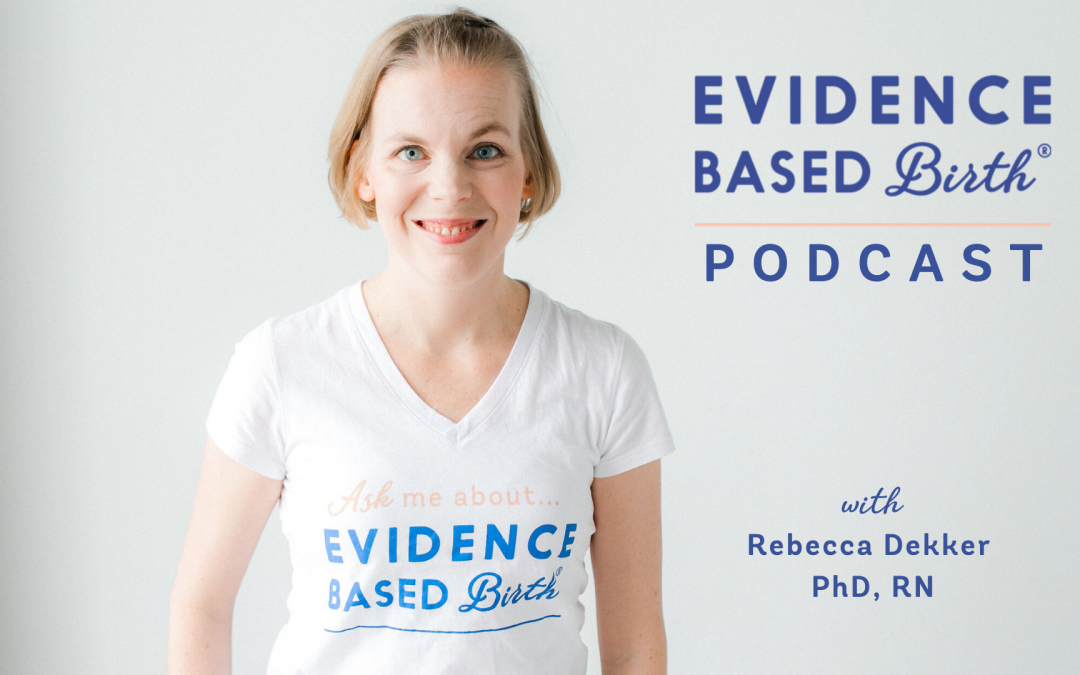
This week, we cover the evidence on inducing labor versus waiting for labor to start on its own, when water has broken before the start of labor. For this podcast, we focus on when water breaks at 37 weeks of pregnancy or later. This is also known as pre-labor rupture of membranes, or PROM.
PROM is a common situation – researchers say that about one in ten pregnant people will have their water break before the onset of labor. Join me as we examine the evidence to see how pregnant people can make the best decisions for themselves when faced with the choice of inducing or waiting.
For more information and news about Evidence Based Birth®, visit www.ebbirth.com. Find us on Facebook, Instagram, and Pinterest. Ready to get involved? Check out our Professional membership (including scholarship options) and our Instructor program.
 Listening to this podcast is an Australian College of Midwives CPD Recognised Activity.
Stay empowered, read more :

EBB 1 – Intro to Evidence Based Birth®
Don't miss an episode! Subscribe to our podcast and leave a review! iTunes | Spotify | YouTube What happens when a nurse finishing up her PhD in evidence-based practice becomes a parent and realizes her own birth care was anything but evidence-based? In this...

REPLAY: EBB 216 – The Evidence on Prenatal Perineal Massage for Preventing Tears in Childbirth with Dr. Rebecca Dekker
Don't miss an episode! Subscribe to our podcast and leave a review! iTunes | Spotify | YouTube Curious if prenatal perineal massage actually works to prevent tears during childbirth? In this episode, Dr. Rebecca Dekker examines the evidence on perineal massage in...

EBB 366 – Practical Ways of Preparing for Postpartum with Sophie Walker, Author and Host of the Australian Birth Stories Podcast
Don't miss an episode! Subscribe to our podcast and leave a review! iTunes | Spotify | YouTube Sophie Walker, host of the Australian Birth Stories podcast and author of The Complete Australian Guide to Pregnancy and Birth and The Complete Guide to Postpartum: A...