

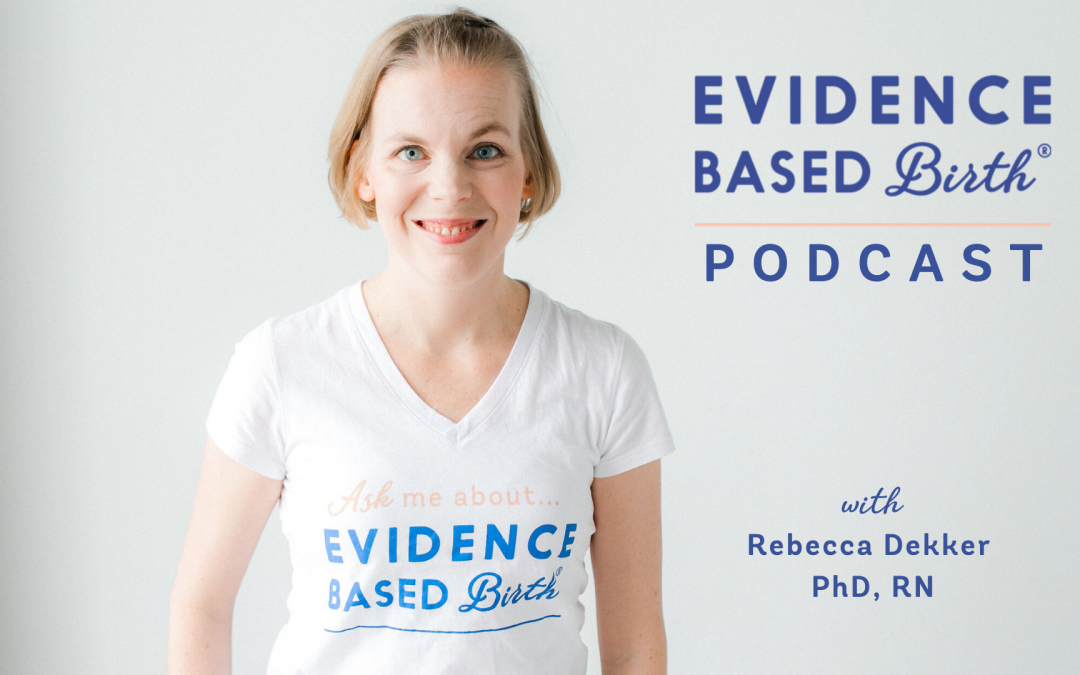
This week, we cover the evidence on inducing labor versus waiting for labor to start on its own, when water has broken before the start of labor. For this podcast, we focus on when water breaks at 37 weeks of pregnancy or later. This is also known as pre-labor rupture of membranes, or PROM.
PROM is a common situation – researchers say that about one in ten pregnant people will have their water break before the onset of labor. Join me as we examine the evidence to see how pregnant people can make the best decisions for themselves when faced with the choice of inducing or waiting.
For more information and news about Evidence Based Birth®, visit www.ebbirth.com. Find us on Facebook, Instagram, and Pinterest. Ready to get involved? Check out our Professional membership (including scholarship options) and our Instructor program.
 Listening to this podcast is an Australian College of Midwives CPD Recognised Activity.
Stay empowered, read more :
EBB 412 – Induction Tips for Families with High-Risk Doula Jennifer Anderson, RN
Don't miss an episode! Subscribe to our podcast and leave a review! iTunes | Spotify | YouTube An induction may change your birth plan, but it doesn’t mean giving up your preferences or your role in the decision-making process. In this episode, EBB's Director of...
EBB 411 – Advocating for a Family Centered Cesarean with Holly and Nathan Miller, EBB Childbirth Class Graduates
Don't miss an episode! Subscribe to our podcast and leave a review! iTunes | Spotify | YouTube When Holly and Nathan Miller learned their baby was breech late in pregnancy, the unmedicated vaginal birth they had been preparing for suddenly felt out of reach....
EBB 410 – Evidence and Controversy Surrounding Freebirth
Don't miss an episode! Subscribe to our podcast and leave a review! iTunes | Spotify | YouTube In this episode, Dr. Rebecca Dekker and Dr. Sara Ailshire examine the available evidence on planned unassisted birth, also known as freebirth, defined as intentionally...