

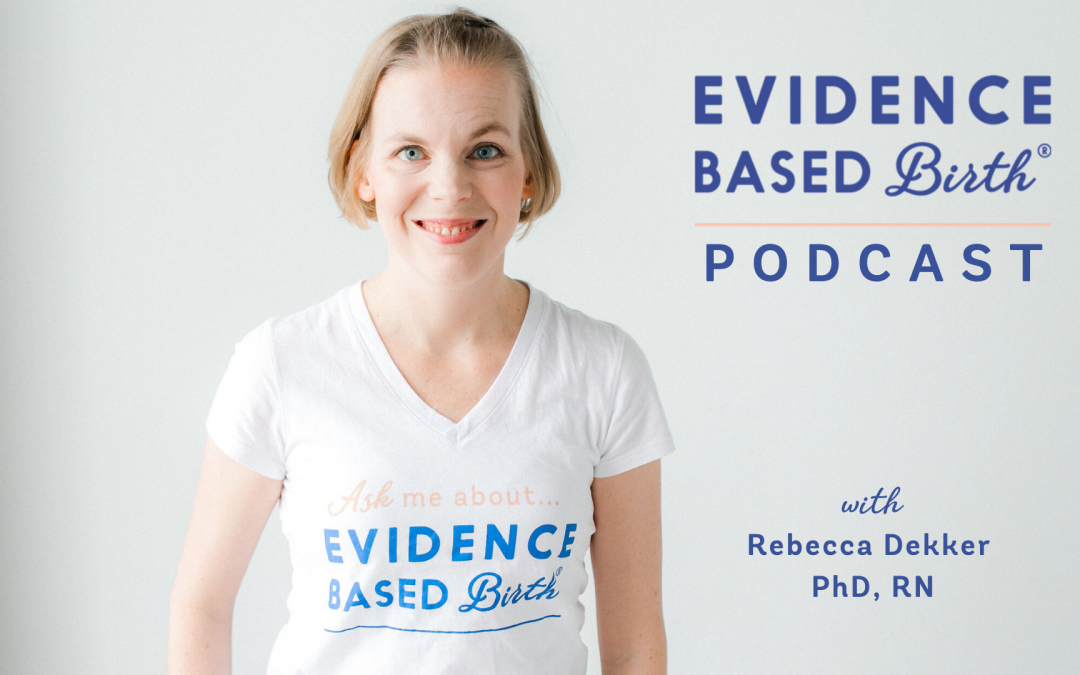
This week, I discuss the concept of due dates – as well as the free webinar I am hosting soon, the Evidence on Induction at 39 Weeks! I want to provide an overview on this topic so you can be prepped for the webinar, which will include discussions on the controversial ARRIVE study.
Tune in as we discuss what it means to be full term, the accuracy of due dates, and how they are calculated. This is important, because inductions for non-medical reasons have been rising globally in the last 30 years. Studies show that inducing labor because the pregnancy is full term, close to the due date, is the number one reason for induction in the United States.
For more information and news about Evidence Based Birth®, visit www.ebbirth.com. Find us on Facebook, Instagram, and Pinterest. Ready to get involved? Check out our Professional membership (including scholarship options) and our Instructor program.
Read EBB’s Signature Article, The Evidence on Due Dates (link: ebbirth.com/duedates)
Register for our webinar, The Evidence on Induction at 39 Weeks (link: ebbirth.com/webinar)
 Listening to this podcast is an Australian College of Midwives CPD Recognised Activity.


Stay empowered, read more :

Evidence on: Group B Strep in Pregnancy
What is the evidence for antibiotics for group B strep during labor? Are there any alternatives? Can hibiclens, garlic, or probiotics treat GBS?

Evidence on: Premature Rupture of Membranes
When someone’s water breaks before labor at term, they have 2 choices– wait for labor to start on its own, or induce labor. What does the evidence say?

Evidence on: IV Fluids During Labor
Are IV fluids during labor necessary if people can choose to eat or drink? In this article we’ll look at the benefits and risks of IV fluids.