


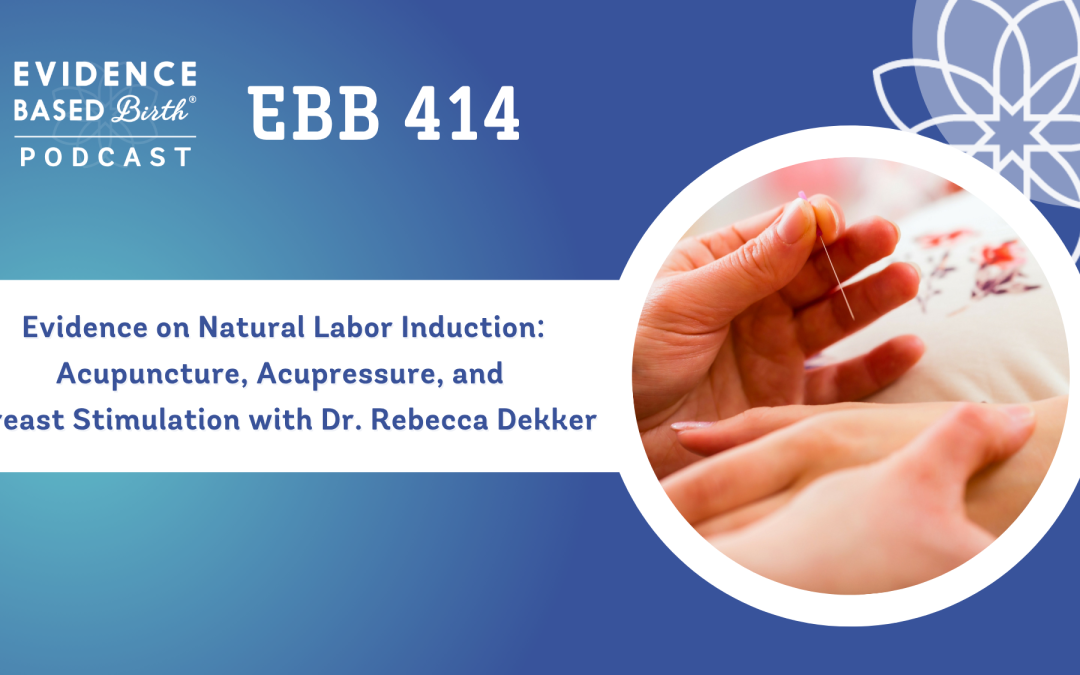
Acupuncture, acupressure, and breast stimulation are popular natural labor induction methods, but what does the latest research tell us about how well they actually work?
In this episode, Dr. Rebecca Dekker dives into the new research on whether these approaches can help ripen the cervix, encourage spontaneous labor, or reduce the need for a medical induction. She explores the evidence on acupuncture, acupressure, and the related practice of Shiatsu, including why studies have reached conflicting conclusions about their effectiveness. She also examines the research on breast and nipple stimulation, how it can trigger the release of oxytocin, and what studies suggest about its potential role in preparing for and starting labor.
Resources
- Zamora-Brito, M., Fernández-Jané, C., Pérez-Guervós, R., et al. (2024). The role of acupuncture in the present approach to labor induction: a systematic review and meta-analysis. Am J Obstet Gynecol MFM, 6(2): 101272. https://doi.org/10.1016/j.ajogmf.2023.101272
- Chen, A., Zhang, Gao D., et al. (2025). Acupuncture for induction of labor in uncomplicated term pregnancies and the role of the acupoint selection: A systematic review and meta‐analysis. Acta Obstetricia et Gynecologica Scandinavica, 104(11): 2038-2053. https://doi:10.1111/aogs.70036
- Zamora-Brito, M., Migliorelli, F., Pérez-Guervós, R., et al. (2024). Acupuncture before planned admission for induction of labor (ACUPUNT study): a randomized controlled trial. Am J Obstet Gynecol MFM, 6(10): 101477. https://doi.org/10.1016/j.ajogmf.2024.101477
- Lokugamage, A. U., Eftime, V. A. I., Porter, D. et al. (2020). Birth preparation acupuncture for normalising birth: An analysis of NHS service routine data and proof of concept. Obstet Gynecol, 40(8): 1096-1101. https://doi.org/10.1080/01443615.2019.1694878
- Vilchez, G., Meislin, R., Lin, L., et al (2024). Outpatient cervical ripening and labor induction with low-dose vaginal misoprostol reduces the interval to delivery: a systematic review and network meta-analysis. Am J Obstet Gynecol, 230(3): S716-S728. https://doi.org/10.1016/j.ajog.2022.09.043
- Atkins, K. L., Fogarty, S., & Feigel, M. L. (2021). Acupressure and Acupuncture Use in the Peripartum Period. Clinical Obstet Gynecol, 64(3): 558-571. https://doi.org/10.1097/GRF.0000000000000636
- Stark, E. L., Athens, Z. G., & Son, M. (2022). Intrapartum nipple stimulation therapy for labor induction: a randomized controlled external pilot study of acceptability and feasibility. Am J Obstet Gynecol MFM, 4(2): 100575. https://doi.org/10.1016/j.ajogmf.2022.100575
- Singh, N., et al. (2014). “Breast stimulation in low-risk primigravidas at term: does it aid in spontaneous onset of labour and vaginal delivery? A pilot study.” Biomed Res Int2014: 69503. https://pubmed.ncbi.nlm.nih.gov/25525601/
- Shqara, R. A., Goldinfeld, G., Assulyn, T., et al. (2025). Breast stimulation vs low dose oxytocin for labor augmentation in women with a previous cesarean delivery, a randomized controlled trial. Am J Obstet Gynecol MFM, 7(5): 101658. https://pubmed.ncbi.nlm.nih.gov/40054666/
- Demirel, G., & Guler, H. (2015). The effect of uterine and nipple stimulation on induction with oxytocin and the labor process. Worldviews on Evidence‐Based Nursing, 12(5): 273-280. https://pubmed.ncbi.nlm.nih.gov/26444882/
- Takahata, K., Horiuchi, Shinohara, K. et al. (2018). Effects of breast stimulation for spontaneous onset of labor on salivary oxytocin levels in low-risk pregnant women: A feasibility study. PLoS One, 13(2): e0192757. https://pubmed.ncbi.nlm.nih.gov/29447299/
- Videgård, M., Anderberg, L., & Wells, M. B. (2025). Nipple stimulation for labour augmentation: evidence from randomised and quasi-experimental studies. BMC Pregnancy Childbirth, 25(1): 1285. https://doi.org/10.1186/s12884-025-08393-3
For more information about Evidence Based Birth and a crash course on evidence based care, visit www.ebbirth.com. Follow us on Instagram and YouTube! Ready to learn more? Grab an EBB Podcast Listening Guide or read Dr. Dekker’s book, “Babies Are Not Pizzas: They’re Born, Not Delivered!” If you want to get involved at EBB, join our Professional membership (scholarship options available) and get on the wait list for our EBB Instructor program. Find an EBB Instructor here, and click here to learn more about the EBB Childbirth Class.
Chapter Guide
(08:30) Cervical Ripening and the Bishop Score
(10:26) Evidence and Safety of Acupuncture for Labor Induction
(19:43) Evidence on Acupressure for Labor Induction
(23:16) Shiatsu and Labor Induction
(27:27) Breast and Nipple Stimulation for Labor Induction
(28:51) Research on Breast Stimulation, Cervical Ripening, and Labor
(32:54) Breast Stimulation vs. Pitocin for VBAC
(35:57) Safety of Breast and Nipple Stimulation
(37:42) Breastfeeding During Pregnancy and Preterm Labor
Transcript
Dr. Rebecca Dekker – 00:00:00:
Hello everyone. On today’s podcast we’re going to talk about the natural labor induction methods of acupuncture acupressure shiatsu and breast or nipple stimulation Welcome to the Evidence Based Birth® Podcast. My name is Rebecca Dekker, and I’m a nurse with my PhD and the founder of Evidence Based Birth®. Join me each week as we work together to get evidence-based information into the hands of families and professionals around the world. As a reminder, this information is not medical advice. See ebbirth.com/disclaimer for more details. Hi everyone, I’m so excited to talk with you about the evidence on several natural labor induction methods. This episode is part of a series and we’re working our way alphabetically through various natural labor induction methods. Today we’ll be talking about the evidence on acupuncture and acupressure as well as its close relative, Shiatsu, and we’ll discuss the evidence on breast stimulation or nipple stimulation for labor induction. The last time I talked about this topic was episode 125 of the Evidence Based Birth® podcast from the year 2020. So today we are giving you an update with the latest research and we will also be updating our other natural labor induction methods in the coming months. So keep your eyes out for episodes on castor oil, evening primrose oil, pineapple, and much more. By the end of this particular episode you’ll be able to discuss the evidence behind acupuncture, acupressure, Shiatsu, and breast stimulation for cervical ripening and induction as well as some of the limitations on the evidence for these methods and we’ll also talk about some sample protocols for each of these methods. We don’t know exactly how many people around the world try to start their labor with natural methods. However, we do know that probably for about as long as there have been pregnancies, people have been trying to get labor started for whatever reason. On the latest Listening to Mothers 4 survey published in 2026, 27% of U.S. participants reported trying to start labor on their own.
Dr. Rebecca Dekker – 00:02:07: Understanding Acupuncture, Acupressure, and Shiatsu
So let’s start at the beginning of the alphabet. We’ll talk about acupuncture, acupressure, and shiatsu, and I’m going to start by giving you a little background on these three concepts in general. Acupuncture has been used for more than 2,000 years in China and Japan, and the earliest evidence on the use of acupuncture dates back to the Stone Age around 3000 BCE. In traditional Chinese medicine, also known as TCM, Qi, which is spelled Q-I in English, is the energy that flows through the body’s 14 meridians. The meridians are like pathways or rivers or branches through the body. With acupuncture, very fine acupuncture needles are inserted into specific acupuncture points along the meridians to stimulate the circulation of qi and blood in order to restore balance between yin and yang and improve health. There are 361 acupuncture points located along the 14 meridians throughout the body. The most common type of acupuncture needles are called filiform needles. These are tiny needles made of stainless steel, and they’re extremely thin. Some people describe them as about the diameter of a strand of hair. The needles come in varying lengths and diameters depending on the area that’s being treated and the depth required. Acupuncture needles can just be left alone for a while, or they could be stimulated with electricity, which we call electroacupuncture. With electroacupuncture, electrodes are attached to the acupuncture needles, and then a mild electric current is applied to the acupoints. Both regular filiform needles and electroacupuncture needles are used in the research that we have on acupuncture for labor induction. Acupuncture can be administered only by a licensed acupuncturist. In contrast, we have something called acupressure, which is when you use your thumb or finger to put pressure on or to massage an acupuncture point. Acupressure can be performed on yourself by yourself, or it can be performed by another person, and it does not require a licensed practitioner. The places where an acupuncturist might place the needle are called acupoints, and they can be broken down into local or distant categories. The two categories help determine how close you are to the point you want to use and which effect you want to happen. Local acupoints are the ones really close to the area you’re trying to treat. These work by increasing blood flow to the area and calming down nerve activity right in that zone. Distant acupoints, on the other hand, are further away from the target area entirely. These distant points work more through effects on the central nervous system, and practitioners often start treatment with distant points because they’re less painful and it helps patients ease into acupuncture, feel more comfortable, and build a little trust before moving on to the more sensitive local points. Some researchers have theorized that when a practitioner combines stimulation of distant and local acupoints, that this can create a synergistic effect and achieve a greater benefit than stimulating just the distant or just the local points. Another thing you will hear me mention when talking about the research on acupuncture is something called sham or fake acupuncture. Sham acupuncture still uses needles to puncture the skin, which can cause a reaction in the participant or a possible placebo effect, but it’s not using the traditional acupuncture points. Some studies don’t use sham acupuncture, and instead they have a control group with just usual care, no acupuncture needles being used at all. However, sham acupuncture is considered by some to be a stronger control group because it helps us tease out whether there is a placebo effect or if there truly is an acupuncture effect. Shiatsu, spelled S-H-I-A-T-S-U, is similar but distinct from acupressure. Shiatsu is an ancient Japanese practice, and its name means finger pressure. Both Shiatsu and acupressure assess for imbalances in the body and use pressure on different points to restore balance and health. Some Shiatsu styles, but not all, use the traditional Chinese medicine meridians that coincide with the ones used in acupressure. And it’s really only been recently that Western researchers have started distinguishing between acupressure and Shiatsu. Shiatsu. There are several key technical differences between acupressure and Shiatsu, including the type of pressure, the way that you position your thumb, and the way in which any body weight is used, if at all. With acupressure, the type of pressure tends to be circular or a pumping action. The thumb is flexed in acupressure as it applies pressure, and the strength of the arms or hands are used to apply pressure. With Shiatsu, the type of pressure that is applied is stationary and sustained. The thumb is extended while it applies pressure, and the whole weight of one’s body is used to apply the pressure. Whether we’re talking about acupuncture, acupressure, or Shiatsu for helping get labor started naturally, the underlying mechanisms are not well understood, but it’s thought to involve stimulation of the uterus through stimulating hormonal changes or the nervous system. The acupuncture community primarily talks about how acupuncture or acupressure may help with cervical ripening. You rarely see acupuncturists talking about how acupuncture can induce labor contractions because we don’t have enough evidence that this modality can literally start contractions. So as a reminder, ripening the cervix is a process in which the cervix softens and thins out in preparation for labor. Sometimes with a medical labor induction, medications or devices are used to get that cervix softened and ripened so that it can eventually begin to stretch or dilate for labor. But you can also use some natural methods to help with the purpose of cervical ripening, and that might be the aim of some interventions rather than having the aim of starting contractions.
Dr. Rebecca Dekker – 00:08:30: Cervical Ripening and the Bishop Score
When we talk about cervical ripening, we also talk about the Bishop Score, which is used to measure or describe the state of the cervix. So to prepare for labor and birth, the cervix needs to soften, thin, and then begin to open. And these changes sometimes start a few weeks before labor begins. Healthcare workers use the Bishop Score to rate the readiness of the cervix for labor. So with this scoring system, a number ranging from 0 to 13 is given to rate the condition of the cervix. There are a lot of calculators online on different websites where you can calculate someone’s Bishop Score. We also have it in our Pocket Guide to induction. But if the total score is eight or greater, then the chances of having a vaginal birth with an induction are very good, similar to the chances of having a vaginal birth after a labor that started on its own. If the score is six or lower, then that means that the cervix is unfavorable for an induction and cervical ripening methods should be used. A score of seven is not clearly favorable or unfavorable. Many studies have found that higher Bishop Scores are linked with a higher chance of having a vaginal birth with an induction. And so that’s why researchers are primarily focused on acupuncture and acupressure as cervical ripening methods because you’re talking about someone who might need an induction soon. And so we’re looking at how ripe is their cervix and can these methods help prepare the cervix for labor to maybe help the process go smoother. So let’s talk about the evidence on acupuncture first. Some researchers have found that acupuncture, when it’s administered by licensed acupuncturists, may promote a more favorable state of the cervix within 24 hours, but other researchers have not found this. So the evidence is mixed. I’m going to go into a little bit more detail on this evidence, and first I want to briefly touch on the safety of acupuncture.
Dr. Rebecca Dekker – 00:10:26: Evidence and Safety of Acupuncture for Labor Induction
So if you’re asking yourself, is acupuncture safe, and more particularly, is it safe during pregnancy? We do have two systematic reviews, one published by Park et al. In 2015, and another by Clarkson et al. In 2015, and they both found a low rate of adverse effects from acupuncture during pregnancy. They stated that most adverse effects are minor and include fainting, drops in blood pressure, drowsiness, discomfort, and localized bleeding or bruising, all of which licensed acupuncturists should be used to dealing with in clinical practice. There were no miscarriages, no preterm births, and no other obstetric complications attributed to acupuncture in either review. I do want to note that there have been extremely rare cases of severe injury and death that have been documented in the general non-pregnant population. In one study published by Lee et al. In 2017, they stated, quote, traumatic events associated with acupuncture are usually caused by improper insertion or manipulation at high-risk acupuncture points, end quote. And so this is mainly talking about acupuncture being done on the chest. However, when carried out by a licensed practitioner, acupuncture in general is accepted to be a safe practice. So if acupuncture is thought to be safe in pregnancy, what’s its effectiveness for cervical ripening? We have two new meta-analyses, both published in 2025, and they had different results. The first of these reviews was published in 2025 by Zamora-Brito, and colleagues. This review examined 17 studies with a total of 3,262 participants, and they wanted to see whether acupuncture could help someone avoid a formal labor induction. The size of the individual studies included within the review ranged from 16 participants all the way to 407 participants, and they took place in countries including Iran, Denmark, United States, Norway, Canada, United Kingdom, and more. Treatment protocols throughout the 17 studies included different techniques and different treatment regimens. 10 studies only used filiform needles, one study used electroacupuncture, three used acupressure, and three trials used a combination of filiform needles and electroacupuncture. The most common acupuncture points in the study included spleen 6, large intestine 4, stomach 36, bladder 32, and liver 3. Most of the studies initiated the acupuncture close to the estimated due date, with four of the studies starting at 41 weeks of pregnancy. Three of the studies started acupuncture after pre-labor rupture of membranes had occurred, so when someone’s water had broken but labor had not started yet, and only one study initiated acupuncture quite early in pregnancy starting at 36 weeks. Authors of this review found that the acupuncture group was more likely to have a spontaneous onset of labor rather than needing a formal labor induction. But the time from acupuncture to giving birth and the rate of Cesarean births did not differ between groups. They also looked at a subset analysis of people who are age 35 and older or who had a body mass index greater than or equal to 30 and they found no significant differences in outcomes of spontaneous labor for these subgroups. Then in 2025 Chen et al published a meta-analysis that aimed to evaluate the effects of acupuncture for induction of labor after 37 weeks to look at the effects on labor progression and birth outcomes. They also wanted to see if they could see any differences if both local and distant acupoints were stimulated together. These authors included studies published in English or Chinese that enrolled people who were pregnant at 37 weeks or later with a single baby and an uncomplicated pregnancy and were randomly assigned to acupuncture or a comparison group of either usual care or sham acupuncture. Data from 10 studies ended up being included in the final analysis with a total of 1,432 participants. Studies came from eight countries, including the United States, Denmark, Australia, Iran, and the United Kingdom, and gestational ages ranged from 37 to 42 weeks. Five of the studies used a combination of local and distant acupoints, and five studies solely stimulated distant acupoints. The duration of the acupuncture sessions ranged from 30 to 60 minutes, and the acupuncture could be delivered across one to five sessions. The authors found that there were no significant differences between the acupuncture and the control groups in the onset of spontaneous labor, the use of epidurals through pain relief, Cesarean rates, or newborn APGAR scores, and there wasn’t enough evidence to draw any conclusions about the effects of combining the local and distant acupoints. So the results from the Chen et al review showed no difference between groups, but the Zamora study did see a significant increase in spontaneous labor with acupuncture. So why is that? Well, first of all, the Chen et al. Study was a smaller review with only about 1,400 participants compared to about 3,300 in the Zamora-Brito review. There were also a difference in the types of studies that the authors included. For example, the Zamora-Brito review included studies that administered acupuncture after your membranes had ruptured, while Chen et al excluded those studies. Chen also cited the prior Cochrane review from 2013 that reported that electrical stimulation at acupuncture points could be more effective than the standard acupuncture at promoting vaginal births. So the Chen review only included one study with laser acupuncture that had 60 participants total, so it’s possible that the regular filiform acupuncture might not be as helpful when preparing someone for an induction of labor compared to electroacupuncture, although we need more research on this. The Chen group also discussed how using sham acupuncture for the control group could lead to different study results than if you just used usual care with no acupuncture at all. This is because puncturing the skin in any capacity can cause a reaction to both the skin and the participants, including a potential placebo reaction. In the Chen et al review, studies where the sham acupuncture served as the control, they found no significant differences in the rates of instrumental delivery between the two groups. However, in studies where usual care was the control, the acupuncture group had statistically better outcomes. Then when you look at the Zamora-Brito review that included 17 trials, seven of them compared acupuncture to sham acupuncture, but 10 of them used usual care as the control. So as we keep an eye on the acupuncture research in the future, it’s just something that we’ll be always noting. You know, did the results have sham acupuncture as the control group or no acupuncture at all? Before we move on from acupuncture, I wanted to share one more example of a study. This is an individual acupuncture trial that did have significant findings. So this study was also published by Zamora-Brito et al., but it came out too late to be part of the meta-analysis. And in this study, the researchers used a randomized control design to evaluate the effectiveness of acupuncture with filiform needles to induce spontaneous onset of labor in women who were already scheduled for an induction date. This study took place at three hospitals in Spain, and they included participants who were pregnant with a single baby in headfirst position and who were scheduled for an induction of labor. They had a total of 212 women in the study, so 106 in the acupuncture group and 106 in the control group. The acupuncture group underwent acupuncture sessions for a maximum of four days prior to the scheduled induction of labor. And the control group received no specific pre-labor intervention. And they looked to see how many people ended up being admitted to the hospital for spontaneous onset of labor or for premature rupture of membranes before or on the day of their scheduled induction. The authors found that overall, women in the acupuncture group were admitted to the hospital one and a quarter days before their scheduled induction labor date, compared to 0.67 days prior to their scheduled induction date for those in the control group. 65% of participants in the acupuncture group and 40% of those in the control group were admitted to the hospital for spontaneous onset of labor or premature rupture of membranes prior to that scheduled induction. There were no significant differences in Cesareans or any other mother or newborn outcomes, and there were no stillbirths in either group. The authors did not measure the Bishop Score before acupuncture was started, and they also decided not to use sham acupuncture so we can’t rule out the placebo effect.
Dr. Rebecca Dekker – 00:19:43: Evidence on Acupressure for Labor Induction
Now let’s talk about acupressure as a natural labor induction or cervical ripening method. Some people may be attracted to this method because it’s non-invasive and it’s something you can do to yourself. The last time we did a podcast on acupressure back in 2020, we cited a Cochrane review published in 2017 by Smith et al. This review combined data from 22 randomized controlled trials with a total of 3,456 participants. Four of those 22 randomized trials were specifically focused on acupressure. Out of the four trials on acupressure, three found no difference between groups, and one study found a possible benefit from acupressure. Since that Cochrane review was published in 2017, unfortunately there have not been a lot of meaningful updates. Most of the updates on acupressure have been about reducing labor pain with acupressure rather than looking at cervical ripening. There is one new meta-analysis that I can cite, but in this review acupressure was not the focus. It was just like one of 15 different interventions they were looking at. So in this review published in 2024, the authors analyzed different cervical ripening methods that could be done outpatient, and they included acupressure as one of those 15, alongside castor oil, membrane sweeping, and several different medications. The final review included data from 42 randomized controlled trials with more than 6,000 participants. Then they ranked the strategies for labor induction to determine the most effective method. The authors found that one of the medications, 25 micrograms of vaginal misoprostol or Cytotec, was the most effective at reducing the time from intervention to giving birth without increasing the odds of Cesarean or without increasing poor outcomes like low APGAR scores or uterine hyperstimulation when the uterus is contracting too frequently. Acupressure, along with primrose oil and castor oil, were associated with the lowest chances of reducing the time to birth and reducing the Cesarean rates. They were also found to have the highest probability of being the least effective methods for labor induction. However, the authors cautioned putting any emphasis on these findings because their review included many low-quality studies. When looking at research on acupressure in general, researchers seem most interested in some of the following acupressure points, large intestine 4, spleen 6, and gallbladder 21. I did want to mention that although there is not a lot of evidence supporting acupressure before labor for labor initiation, there’s actually a lot more evidence on other uses of acupressure during labor. For example, in a Cochrane review done by Smith et al. In 2011, looking at the effects of acupressure done once labor has already started, they found that randomized controlled trials have shown that acupressure during labor is linked with reduced pain intensity, lower anxiety, lower Cesarean rates, less need for Pitocin® to augment labor, and shorter labors. Most of these studies on these topics use the acupressure points spleen 6 and large intestine 4. The Cochrane authors did note, however, that the risk of bias is high in most of these trials, and we can’t really make specific recommendations for practice until we have more high-quality research on this subject.
Dr. Rebecca Dekker – 00:23:16: Shiatsu and Labor Induction
And then one more related topic is shiatsu. As a reminder, shiatsu is related to acupressure with slight differences in how pressure is applied, and this method originates from Japan. The last time we had a podcast on this topic in 2020, we had found two studies on shiatsu where they found that birthing people were less likely to need Pitocin® with an induction when shiatsu was being used during an induction. For example, there was one randomized trial with 288 people in Iran who were 42 weeks or greater. They were randomly assigned to receive shiatsu with gallbladder 21, large intestine 4, and spleen 6 versus standard care where they didn’t get any acupressure. They found lower rates of Pitocin® with the shiatsu group. There’s also a non-randomized study with 66 people from the United Kingdom who were 40 weeks pregnant or greater. And in this study, they used gallbladder 21, large intestine 4, and spleen 6 and compared shiatsu with those points to standard care. And they found, again, lower Pitocin® rates with the shiatsu group. However, there is limited information presented in these manuscripts, so it’s difficult to evaluate the quality of these studies. In general, there’s very little research on shiatsu, and we need more research on this topic, including studies that have a sham control, meaning a fake treatment in the control group. So how do we sum up the evidence on acupuncture, acupressure, and shiatsu for natural labor induction? Given all of the research that I’ve just gone over, it appears that these methods are likely to be safe when performed by professionals, but we don’t have high-quality evidence showing that any of them are effective for ripening the cervix or for lowering the chances that you might need a formal medical labor induction further on. One major problem with all of the randomized trials on these topics is that they tend to have strict protocols, meaning they’re not individualized to each laboring person. In real life, someone might need different acupuncture or acupressure methods, depending on what’s happening in their unique situation. When we look at professional recommendations from the American Congress of Obstetricians and Gynecologists, the Association of Ontario Midwives, and the Royal College of Midwives in the United Kingdom, they all characterize acupressure and acupuncture as complementary and alternative medicine approaches. These organizations don’t specifically recommend these methods for cervical ripening, probably because other methods have been established and proven to work. However, they do mention in their guidelines that these methods may help with labor pain or with other pregnancy-related ailments, such as nausea, and we cover the research on the effectiveness of acupuncture and acupressure for labor pain in a separate podcast episode. In our search for the latest evidence, we did find an article published in the Clinical Obstetrics and Gynecology Journal by three OBGYNs in 2021 who called for more acceptance with their peers for acupressure and acupuncture during the perinatal period. They wrote that, quote, there is substantial research evidence supporting acupuncture and its derivatives in the peripartum period, end quote. And they summarized the existing literature across different applications, including using acupuncture and acupressure for labor pain, labor induction, breach presentation, postpartum recovery. But they did not look specifically at cervical ripening in its own focus section of the paper. But they did position acupuncture and acupressure as a legitimate complementary option for OBGYN providers to be aware of to be something that could be utilized in pregnancy all the way through to labor and birth in the postpartum period. Additionally, we found a study in 2016 among OBGYNs, and 45% of them reported personally using complementary and alternative medicine. And 62% had advised their patients to use some form of complementary and alternative medicine in pregnancy.
Dr. Rebecca Dekker – 00:27:27: Breast and Nipple Stimulation for Labor Induction
So now let’s move on to breast stimulation or nipple stimulation as a form of natural labor induction. Breast or nipple stimulation can cause the release of oxytocin from the posterior pituitary gland in your brain, which can start or enhance uterine contractions towards the end of pregnancy. Breast stimulation and nipple stimulation have been used historically around the world. To induce and augment labor in many different cultures. It’s been reported specifically in the medical literature as early as the 1700s. There is no standard definition of breast stimulation, so the techniques and timing vary across the studies. Some of the reasons people are drawn to this method include the fact that it doesn’t cost anything, it’s non-medical, and it gives pregnant people more control over the induction process. Unfortunately, the last systematic review we have on breast or nipple stimulation for labor induction was published in 2005. There was one review published more recently, but it focused on using it to augment labor, so contractions have already started. We did a search for more recent information and found two randomized controlled trials on breast or nipple stimulation that I can talk about today and one other non-randomized study that measured oxytocin levels with breast stimulation. And those are the three studies I’ll focus on today.
Dr. Rebecca Dekker – 00:28:51: Research on Breast Stimulation, Cervical Ripening, and Labor
So first, there was a randomized controlled trial from India published by Singh et al. In 2014. This was a pilot study to determine if breast stimulation could help low-risk first-time pregnant mothers achieve a spontaneous labor in a vaginal birth. So they had 200 participants in this study, and 100 of them were randomly assigned to watch a video and then be advised to perform breast massage starting at 38 weeks of pregnancy. The other 100 participants were not assigned to receive that intervention. So we have half the participants beginning to massage their breasts for 15 to 20 minutes each side three times a day starting at 38 weeks, and the other half of the participants did not do this. They did measure the Bishop Score both at 38 weeks and then again at 39 weeks. They found that the Bishop Score changed significantly after one week in the breast stimulation group, but not in the control group. The breast stimulation group also went into labor sooner. They gave birth at an average of 39 weeks and two days of pregnancy versus 39 weeks and five days of pregnancy in the control group. And the breast stimulation group also had significantly fewer Cesarean births, 8% Cesarean rate versus 20% in the control group. There were no differences in postpartum hemorrhage between the two groups. There was one case of uterine hyperstimulation in the breast stimulation group. There were no significant differences between groups in terms of the length of labor, the meconium staining of the waters or any other newborn outcomes. 92% of the women in the breast stimulation group said that they were satisfied with that induction method. I mentioned that small non-randomized study that looked at oxytocin levels, and I want to talk about that one next. This one was very interesting because they were linking the intervention with laboratory data. It was published by Takahata et al. In 2018 and came out of Japan. Interestingly, in Japan, about 50% of pregnant women are reported to use breast stimulation to help induce labor, so it’s a common practice. This study included 16 low-risk pregnant women between 38 weeks and 40 weeks gestation. They excluded anyone with medical problems or those with a prior Cesarean or who were already breastfeeding during pregnancy. So the 16 women in the study stimulated each breast for 15 minutes at a time for a total of one hour each day over three days. So before they started, a midwife demonstrated how to perform the breast stimulation using a breast model and a pressure measuring instrument. The recommended pressure was 20 to 50 millimeters of mercury, which is gentle pressure. They used a metronome to show the mother a rhythm of about 69 beats per minute, and there was a YouTube video they could use that had the timing down for them. The stimulation was performed by pinching the chest to a degree that did not hurt, starting from the outer areola to the nipple using the thumb, forefinger, and middle finger. They taught the women to use massage oil, and they gave them a nursing cover, and they put on a movie for the mothers to watch while they did the breast stimulation. So those mothers came in for an hour at a time each of those three days to do the breast massage. The researchers collected samples from their saliva before and after the intervention to measure their oxytocin levels. The median oxytocin level went up 30 minutes after breast stimulation started, and it was highest on day three after doing the breast stimulation. And six of the 16 women went into labor within 72 hours of starting the breast massage. So although this study was small, it’s pretty typical when you’re looking at these like biomedical results when they’re also measuring laboratory values to have smaller studies. And I find it interesting that within 30 minutes of starting the intervention of the breast massage, they saw the oxytocin levels go up.
Dr. Rebecca Dekker – 00:32:54: Breast Stimulation vs. Pitocin® for VBAC
So natural labor induction methods might be extra appealing to someone who needs to give birth by a certain date, but for whatever reason might want to or need to avoid medications such as Pitocin®, also known as IV oxytocin, in their induction. And in particular, that might happen with people who want a VBAC, a vaginal birth after Cesarean, because the risk of the uterus rupturing during labor, although it’s small, it goes up when medications such as Pitocin® are used. So in 2020, Shakara et al published a randomized controlled trial comparing labor induction methods for patients with a prior Cesarean delivery. There were two groups in this study, the breast stimulation group, 33 participants, and the oxytocin group, 34 participants. They had similar demographics and obstetric profiles. So in order to be in the study, you had to be pregnant with a single baby at 37 weeks or greater. The baby had to be in headfirst position. You already had to have a ripened cervix that was dilated 2 to 6 centimeters and a Bishop Score above 6 and a history of one prior Cesarean delivery. Patients were randomly assigned to either be stimulated with a breast pump or to have low-dose oxytocin-given IV. An intrauterine pressure catheter was inserted through the cervix into every patient, and both of the treatments were continued for a maximum of 12 hours. If the patient didn’t get into active labor within 12 hours, then it was deemed a quote-unquote intervention failure and the participants were switched to try the other group intervention. The researchers found that the two groups had similar vaginal birth rates and deliveries within 24 hours and similar newborn health outcomes. However, the intervention did not work to get the patient into active labor in 24% of the breast stimulation group compared to 6% of the IV oxytocin or Pitocin® group. It also took more than twice as long to get to the birth in the breast stimulation only group. It took about 11 hours versus 5 hours in the IV oxytocin group. Those who were doing the breast stimulation and the 24% of them that didn’t get into active labor were given oxytocin for a short period of time, and 94% of those went on to give birth vaginally. In fact, 94% of both groups gave birth vaginally within 24 hours, but more births occurred within 12 hours in the IV oxytocin group. On the safety side of things, there are two uterine ruptures in the oxytocin group for a uterine rupture rate of 6% compared to zero uterine ruptures in the breast stimulation group. The authors ask people to interpret their findings with caution, and they cite the need for a larger randomized control trial. You also might want to note that this hospital already had a really good VBAC success rate of 80% and a very low Cesarean rate of 19%, which are better rates compared to the national average.
Dr. Rebecca Dekker – 00:35:57: Safety of Breast and Nipple Stimulation
I also wanted to talk briefly about the safety of breast or nipple stimulation as a natural labor induction method. In 2015, researchers published a case report warning of the potential dangers of uterine tachysystole when the uterus is contracting too quickly, too many contractions close together with prolonged fetal heart rate decelerations following nipple stimulation. And this was in a case where a mother who had two prior vaginal births and uncomplicated pregnancy was trying to use nipple stimulation to augment labor to make it go faster. This woman did experience uterine tachysystole following nipple stimulation and her healthcare providers had to give her an injection of terbutylene, a medication that is used to stop contractions. And the mother revealed that she had been doing breast stimulation and her providers didn’t know that this was what she was doing. After this episode of uterine tachysystole resolved, the contractions increased over the next several hours and her baby was born healthy. There have also been a few reports of a similar complication when women were performing nipple stimulations during a fetal contraction stress test back in the 1980s. There is a systematic review of studies looking at nipple stimulation for augmenting labor, for strengthening labor contractions. And they have found that nipple stimulation is effective for augmenting labor in most of the studies that have been done on this topic with no adverse maternal or fetal outcomes reported. The authors of this review included 10 studies with more than 1,200 participants. Any reported cases of uterine tachysystole or prolonged contractions were resolved within a few minutes of stopping the nipple stimulation.
Dr. Rebecca Dekker – 00:37:42: Breastfeeding During Pregnancy and Preterm Labor
Now, since breast stimulation in late pregnancy has been proposed as a means of inducing labor, some people might worry that a breastfeeding infant or toddler could induce a preterm birth. And in 2017, Lopez-Fernandez et al. Conducted the first systematic review to look at outcomes related to breastfeeding during pregnancy. And they found seven studies that examined breastfeeding during pregnancy and rates of preterm birth. None of the studies found a significant difference in the rate of preterm birth between mothers who breastfed during pregnancy and those who did not. The authors theorized that nipple stimulation or breast stimulation may only induce labor in late pregnancy once the oxytocin receptors are fully present in the uterus and ready to respond to the oxytocin. And the authors also stated that there’s no evidence that breastfeeding is harmful in earlier pregnancy or that it could cause preterm birth. So what’s the bottom line on breast or nipple stimulation as a natural method induction? Well, in our review of the literature, we found that breast or nipple stimulation may assist with cervical ripening and it increases the chances of starting labor over the next few days. For someone who’s considering breast or nipple stimulation to induce labor, it’s really important to talk with your healthcare provider about this. The amount of oxytocin released during breast or nipple stimulation is not controlled, so there is a risk of overstimulating the uterus. Although we need more research on this in general as well as on side effects, I found it interesting that one study looking at VBAC and the use of breast or nipple stimulation found that the breast stimulation might not be as effective as IV oxytocin or Pitocin®, but there were zero cases of uterine rupture in the breast stimulation group compared to several cases in the IV oxytocin group. This does not mean that the risk of uterine rupture is zero with the VBAC because we need a much larger sample size to look at the effects of this intervention and when you’re measuring such a rare outcome. However, I think these results were encouraging in terms of using this as a natural method induction in a VBAC situation. I also want to note that most of the research studies on nipple stimulation, the researchers and care providers carefully monitor the fetal heart rate during and after the stimulation intervention, and that’s not something that’s going to happen if you’re doing this at home or on your own without talking with your provider about it. Also, in most of the studies on breast or nipple stimulation, participants are stimulating each side for 15 minutes, alternating sides for a total of one hour. So it’s important to note that in none of these studies are people stimulating both sides at the same time as that could potentially release too much oxytocin. Most research studies are also teaching women to pause the stimulation during a contraction and to stop the breast stimulation if contractions are closer than three minutes apart or if the contractions are lasting longer than a minute. Phew! So we’ve covered a lot. We talked today about the available evidence on acupuncture, acupressure, shiatsu, and breast or nipple stimulation for ripening the cervix or for trying to induce labor and lessening the use of medications. So although the research on breast and nipple stimulation is promising and the findings are mixed on acupuncture and acupressure, we do need more research. And please keep in mind that the available research we do have probably does not apply to people in higher risk situations who have additional medical or pregnancy complications. It’s always really important to talk with your care provider if you’re thinking about or planning to use any of these techniques so that your care provider can help you decide whether the evidence applies to your unique situation and they might also want to cover some safety precautions with you. For example, you may want to discuss whether or not you want fetal heart rate monitoring during breast or nipple stimulation. You may also want to go over your risk factors or history of any prior pregnancies or births to discuss whether there are factors that make it less safe for you to use these methods. That wraps up our episode all about the evidence on using acupuncture, acupressure, shiatsu, and breast stimulation to naturally induce labor. I hope you found this information interesting. Check back in about a month as we’re going to do another episode all about the evidence on using castor oil and eating date fruit to induce labor or to ripen the cervix. Thanks everyone for joining us today, and I’ll see you next week. Bye. Today’s podcast was brought to you by the Evidence Based Birth® Professional Membership. The free articles and podcasts we provide to the public are supported by our professional membership program at Evidence Based Birth®. Our members are professionals in the childbirth field who are committed to being change agents in their community. Professional members at EBB get access to continuing education courses with up to 23 contact hours, live monthly training sessions, an exclusive library of printer-friendly PDFs to share with your clients, and a supportive community for asking questions and sharing challenges, struggles, and success stories. We offer monthly and annual plans, as well as scholarships for students and for people of color. To learn more, visit ebbirth.com/membership.
 Listening to this podcast is an Australian College of Midwives CPD Recognised Activity.

Get Empowered! Learn more…

EBB 146 – Giving Birth in Atlanta with Tara Thompson
Don't miss an episode! Subscribe to our podcast: iTunes | Stitcher In this episode, I interview Evidence Based Birth® Instructor Tara Thompson. Tara is a certified birth doula with CAPPA, a Lamaze certified childbirth educator, and a licensed massage therapist...

EBB 145 – Fatherhood and Advocacy in Birth with JaMichael Perryman
Don't miss an episode! Subscribe to our podcast: iTunes | Stitcher In this episode, I interview JaMichael Perryman, who is husband of Evidence Based Birth Professional Membership Coordinator and EBB Instructor Chanté Perryman. JaMichael is father to five children,...

EBB 144 – Evidence on Pineapple and Sex for Natural Labor Induction
Don't miss an episode! Subscribe to our podcast: iTunes | Stitcher In this episode I answer several questions about natural labor induction: Can eating pineapple help induce labor contractions? What about having sex? Is that really effective for starting labor!...